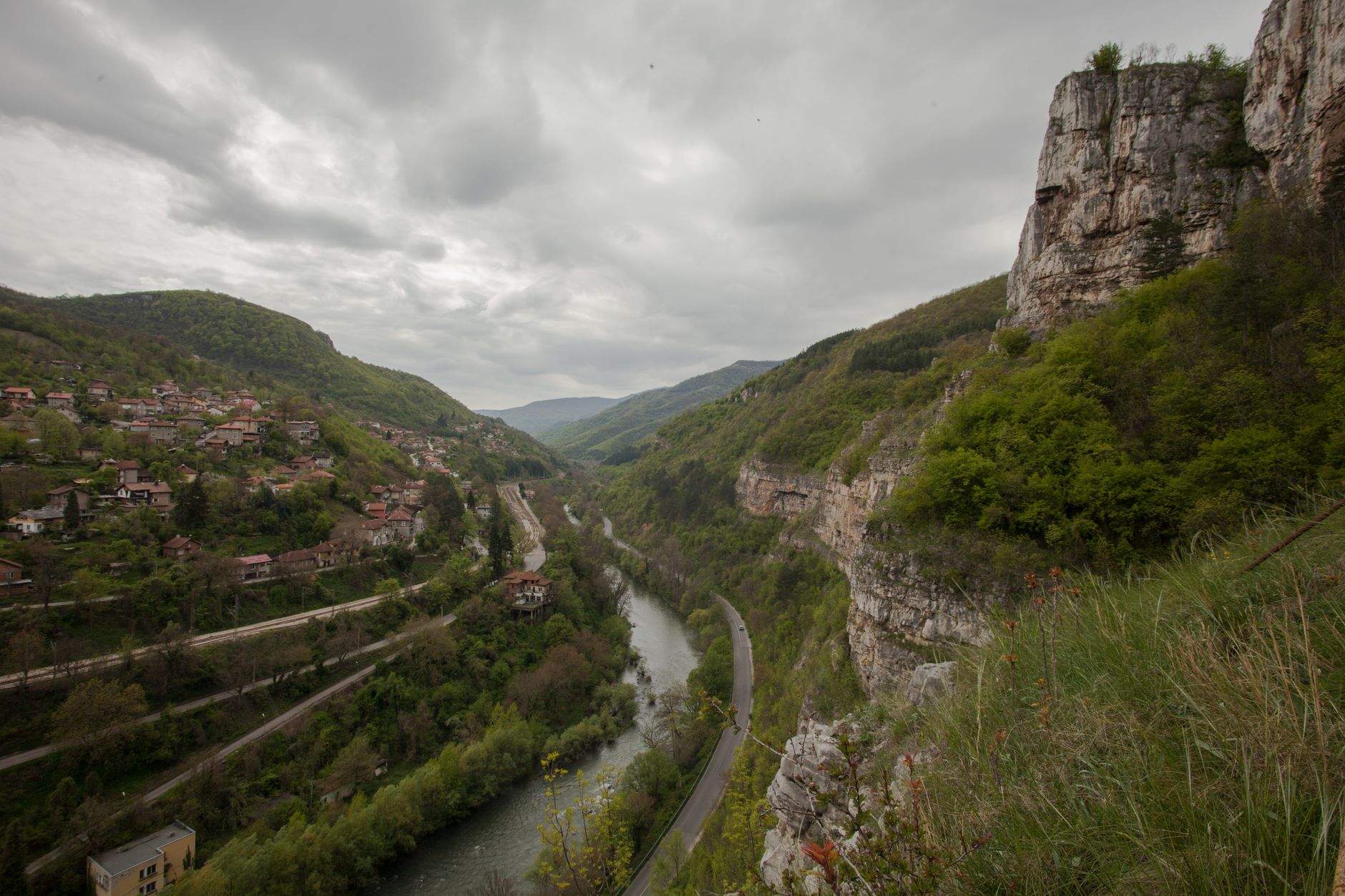
Where Novi Iskar sits
Novi Iskar is not really a Sofia neighbourhood — it is a satellite town that got absorbed into Sofia-Grad municipality but keeps its own centre, its own train station, and its own feel. It sits at the northern edge of the Sofia plain, where the Iskar river cuts into the Stara Planina range and heads through a 60km gorge toward the Danube. This is the traditional route between Sofia and the north of Bulgaria, and Novi Iskar is the last stop before the mountains close in.
The town has around 15,000 residents and combines light industry, some agriculture, and a growing population of Sofians who commute in for cheaper housing. For a visitor, that mix produces a place that is functional rather than picturesque — a working town with supermarkets, a market hall, some Soviet-era blocks and a fringe of village houses, not a destination in itself.
Who it suits
Travellers on a strict budget who need cheap Sofia-adjacent accommodation and don’t mind commuting. If your ceiling is €35 a night for a double room with breakfast, Novi Iskar gives you cleaner and larger rooms than the same price gets you in the city. It also suits anyone touring northern Bulgaria by car — Vratsa, Belogradchik, the gorge itself — because you avoid crossing Sofia at both ends of the trip.
Hikers and climbers heading to the Iskar gorge for its limestone walls and the marked trails around Lakatnik get a natural base here. The train from Novi Iskar station follows the gorge and stops at the crags, so a rope bag and a set of climbing shoes can travel without a car. Cyclists doing the Vitosha-to-Danube route stage through here too.
Who it doesn’t suit
Almost anyone visiting Sofia for Sofia. This is not a place to stay to explore the city. You are 18km out, the commute in is 40-55 minutes by train or bus and unpleasant at rush hour, and there is no reason to be here after dark unless you have booked accommodation with intent. First-time visitors, culture tourists, food tourists, nightlife tourists — all should book closer in.
It also doesn’t suit anyone with high expectations of the neighbourhood itself. Novi Iskar has no notable restaurant scene, no bar culture worth crossing town for, no museums, and no walking-tour density. The pretty parts of Bulgaria near here — the gorge villages, the monasteries — are outside the town, not in it, and require transport to reach.
What a night costs
Guesthouses and small family hotels run €24-€39 for a double with breakfast, which is genuinely the cheapest walk-in-and-stay price band anywhere in Sofia-Grad. Newer three-star properties, of which there are only a handful, sit at €43-€65. There is essentially no upper end — no four-star, no spa hotel, no boutique property. If that is what you want, look elsewhere.
Summer weekends see some price movement when Sofians rent country houses in the surrounding villages, but weekday rates are stable year-round. Long stays are negotiable and monthly rates for a small apartment run €303-€433, which explains why some remote workers park here for a season. Just budget honestly for the transport cost of getting anywhere else.
What is within walking distance
From the town centre you can walk to the market hall — one of the best in Sofia-Grad municipality for produce, cheese and honey from surrounding villages — to two or three functional restaurants doing grilled meat and salads at €7-€10 a head, and to a small park along the river. The train station is 15 minutes on foot from most of the town, and it runs regional services north into the gorge and south to Sofia Central Station.
What you don’t have within walking distance is anything a Sofia visitor came for. There is no old town, no cathedral, no museum quarter, no restaurant cluster worth booking a table at. The gorge itself starts a few kilometres north and is best reached by train or bike. If you want a walking-based holiday, Novi Iskar gives you very little to walk to.
Transport and access
The train is the good news. Sofia Central to Novi Iskar takes 20-25 minutes on regional services running roughly hourly, and the ticket is under €2. This is genuinely faster than the bus and one of the few Sofia commutes where rail beats road. From the same station, trains continue up the Iskar gorge to Lakatnik, Cherepish and beyond, which is the main practical case for staying here.
Buses 20, 22 and 24 also connect to Nadezhda and central Sofia, taking 45-60 minutes at cost of about €1. Sofia Airport is 20km and 30-40 minutes by taxi at €16-€19, but you would have to have a reason to fly into Sofia and stay in Novi Iskar first — it is not a convenient airport base.
The honest recommendation
Do not book Novi Iskar as a Sofia base. Book it for a specific purpose: a cheap night before an early train up the gorge, a stopover on a driving tour of northern Bulgaria, a longer stay while working remotely on a very tight budget, a climbing or hiking trip that uses the gorge trails. In those cases it works and the price is unbeatable in the municipality.
For a standard three-to-five-day Sofia trip, the €13-€17 a night you save over a budget hotel in Vazrazhdane or Serdika is spent twice over on taxis, train tickets and lost time. Novi Iskar is a real place with its own logic, and that logic is not tourism. Respect that and it will serve you well; ignore it and you will spend the trip commuting.
Questions, answered
Is Novi Iskar safe for visitors?
Yes, it is a normal Bulgarian working town with low crime by European standards. The station area is quieter after dark than the town centre and lit patchily; walk with intent late at night as you would anywhere. Stray dogs are more common than in central Sofia and are best given a wide berth.
Can I do day trips from Novi Iskar without a car?
Yes, along the Iskar gorge line. Trains stop at Lakatnik (climbing crags and a good village walk), Cherepish (a beautiful monastery in the gorge), and Mezdra (a market town with connections onward). Sofia is 25 minutes south by the same line. The rail network beyond the gorge is limited and slow.
Are there any decent restaurants in Novi Iskar?
The scene is thin. A couple of grill-and-salad mehanas serve honest Bulgarian food at €7-€10 a head, and there is a pizzeria and a bakery cluster. Nothing worth crossing town for. Do your food-focused eating on evenings you are already in Sofia centre, and treat Novi Iskar meals as fuel rather than experience.
Doing good is the business: every booking through Stay Sofia funds one verified tonne of carbon removal — same room, same price, no markup.
Start your search