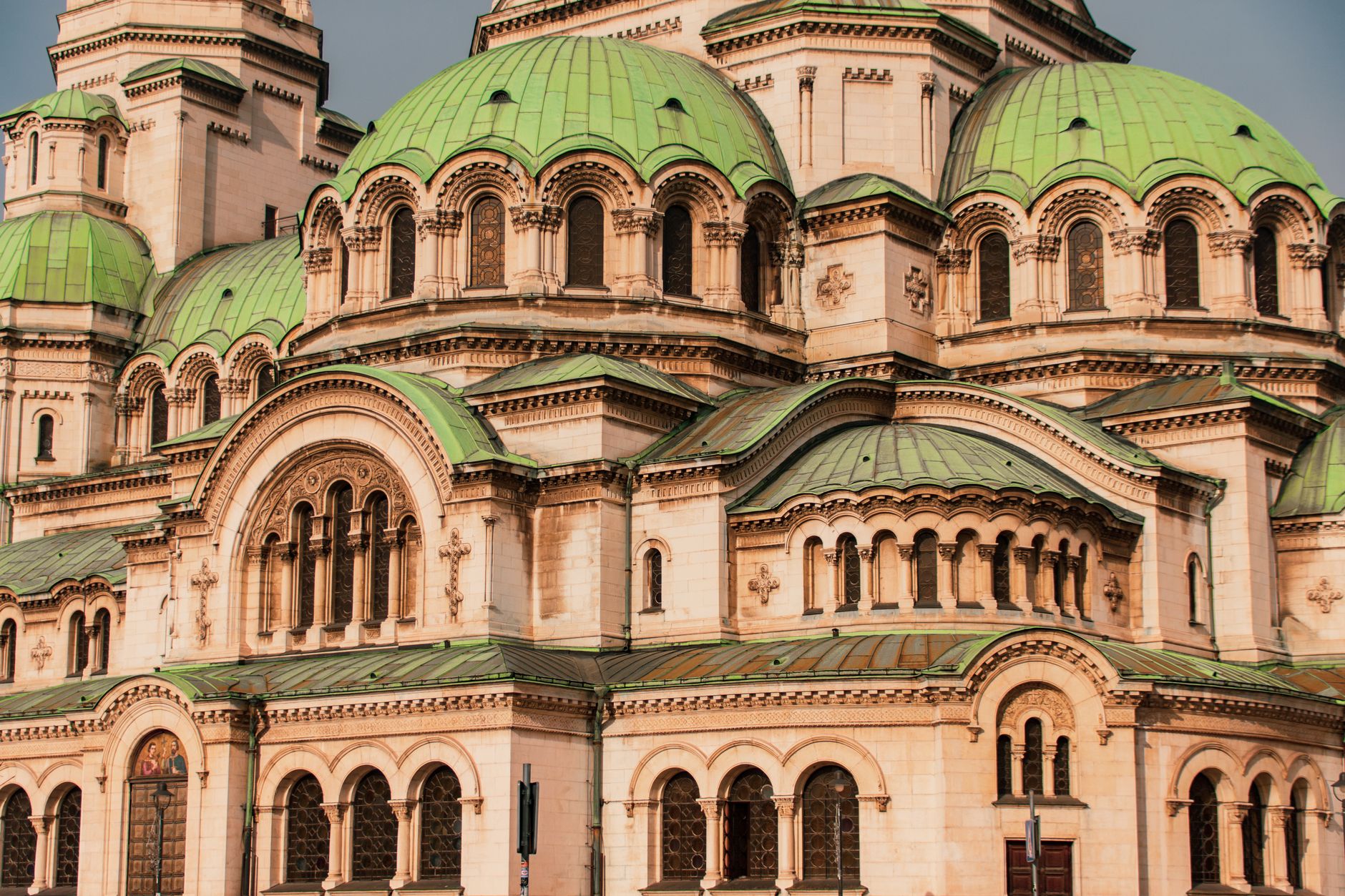
1. Alexander Nevsky Cathedral and the crypt museum
Number one is not the safe pick — it is the correct one. The neo-Byzantine bulk of Alexander Nevsky dominates Oborishte from any angle, and the interior, kept in a low candle-lit gloom, is one of the few church spaces in the Balkans that still feels used rather than staged. Entry to the nave is free; the crypt icon museum costs about €5 and holds the best single collection of Bulgarian religious art anywhere. Go at 8am on a weekday for the choir practice, or 5.30pm Saturday for vespers with actual congregants.
The honest catch: the exterior photographs better than the interior in daylight, so do not lead with a lunchtime visit. The square outside is under intermittent works through 2026 and the souvenir stalls on the north side are aggressive with prices. Skip them and walk two blocks to the Sunday antiques market on the church's east flank instead, where the same icons cost half. If you only see one thing in Sofia and have ninety minutes, this is it — cathedral first, crypt second, coffee at Rainbow Factory on Shipka after.
2. Vitosha mountain by the Simeonovo gondola
Sofia's second-place attraction is a functioning ski mountain inside the city limits, which almost no European capital can claim. The Simeonovo gondola runs weekends year-round and daily in ski season (mid-December to early April), climbing from 1,100m to Aleko at 1,810m in about twenty-five minutes for around €10 return. In summer you get alpine meadows, the Boyana waterfall trail, and Cherni Vrah at 2,290m within a three-hour walk of the top station. Bus 122 from Hladilnika metro drops you at the gondola base for €1.
The catch is weather and queues. Vitosha creates its own cloud by mid-morning even in July, so ride up before 10am or accept you may see fog. Weekend queues at the gondola in February hit ninety minutes; go midweek or use the Dragalevtsi chairlift instead, which is slower but usually empty. Bring a jacket in any month — the summit runs 15°C cooler than the city. This beats every day-trip on offer because it does not require a day.
3. Boyana Church and the National History Museum combo
Third because the two sit five minutes apart and together make the strongest half-day in Sofia. Boyana Church is a UNESCO site the size of a garage; the 13th-century frescoes inside are the reason art historians talk about a proto-Renaissance in Bulgaria. Entry is timed, ten minutes inside, about €5. The National History Museum, in the former communist government residence up the road, holds the Thracian gold — Panagyurishte, Valchitran — in one room, and is worth two hours at €5 entry.
The honest catch: getting there is annoying without a car. Bus 64 from NDK runs hourly and drops between the two; a taxi from centre is about €6 one way and worth it. Do not attempt this on Monday when the museum closes. Skip the museum café — the food is cafeteria-grade — and eat back in Boyana village at Vodenitzata, a mill-turned-restaurant with folk music some evenings and mains around €9. Book the church slot online the day before in summer.
4. The yellow-brick centre walking loop
Fourth is free and takes two hours. The literal yellow paving stones — Austro-Hungarian ceramic tiles laid in 1907 — cover the core streets from the Presidency past the Party House to the National Assembly, and walking the loop takes in the Rotunda of St George (a 4th-century church inside a modern government courtyard), the Roman ruins of Serdica exposed under the metro plaza, the Banya Bashi mosque, the synagogue, and the covered market Halite. Every layer of the city is within four blocks.
The catch is that nothing is signposted well and the free walking tours, which leave from the Palace of Justice at 10am, 11am and 6pm, are the honest way to do this. Tips run €7-€13. Avoid the paid "communist tours" that charge €26 for the same route with a costume. Halite closes at 8pm and the top-floor food stalls are the cheapest sit-down lunch in the centre, around €5 for banitsa and ayran. Do this on arrival day to orient.
5. Central Mineral Baths and the free public taps
Fifth: Sofia is a spa town nobody talks about as one. The 1913 Central Mineral Baths building is now the Regional History Museum (€3), but the real draw is the free mineral water taps on its south side, where locals queue with plastic bottles at 46°C water that comes straight from the spring. There is a small park with benches to drink it in. Farther out, the outdoor thermal complex at Ovcha Kupel and the wilder pools at Pancharevo lake give you the actual bath experience for €4-€13.
The catch: the central taps look scruffy and the water tastes of minerals in a way first-timers find off-putting. Persist — the locals filling five-litre containers know something. The Gorna Banya taps, twenty minutes west by tram 5, are the softest-tasting in the city and worth the detour if you are staying more than three days. Do not confuse these with the paid "spa hotels" charging €35 a session for the same water piped uphill.
6. Rila Monastery as a long day trip
Sixth, and the only entry that requires leaving the oblast. Rila is 120km south, about two hours by car and three by the daily bus from Ovcha Kupel station (€9 return). The monastery courtyard, with its striped arcades and Zograf frescoes, is the single most photographed site in Bulgaria and earns it. Entry is free; the museum with Rafail's Cross costs €3. Combine with the Stob earth pyramids en route or the Seven Rila Lakes chairlift if the season allows (June-October).
The catch is timing. Day-trip tour buses from Sofia arrive between 11am and 2pm and turn the courtyard into a car park of umbrellas. Take the 6.20am public bus, be there by 9am with the monks, and you get the place almost empty for two hours. Eat mekitsi (fried dough, €2) at the stall by the outer gate; skip the tourist restaurants. Back in Sofia by 6pm. This beats Plovdiv as a day trip because Plovdiv deserves two nights, not one day.
7. Museum of Socialist Art
Seventh because it is the sharpest, weirdest museum in the country and takes ninety minutes. Out in Iztok near G.M. Dimitrov metro, the compound holds 77 monumental sculptures rescued from communist-era squares — Lenin, Dimitrov, red-star partisans — arranged in a garden you walk through, plus a gallery of socialist realist painting and a screening room running propaganda newsreels on loop. Entry is €3. It refuses to editorialise, which is why it works: you make your own judgement.
The catch: the neighbourhood around it is office parks and offers nothing else, so plan the visit around metro line 1 and go straight back. Do not expect explanatory labels in English beyond the basics — the point is the objects. Combine with a walk down Tsarigradsko Shose to the Sofia University botanic garden if the weather holds. Closed Mondays. This is the museum that makes Sofia legible for anyone who found the communist chapter of Bulgarian history abstract.
8. Sunday brunch and antiques at Bulevard Vasil Levski
Eighth is a routine rather than a site. Sundays in Sofia have congealed around a specific loop: the antiques and book market along the cathedral's east side from 9am, brunch on Shishman street (Made in Home, Cosmos, or Skara Bar for meat-eaters, mains €7-€12), and a slow walk south through Doctor's Garden to City Garden. The market is genuine — Soviet cameras, Ottoman coins, communist propaganda posters at €4-€26 — not tourist tat, and haggling is expected down to about seventy percent of asking.
The catch: it only happens Sunday, and rain kills the market. Made in Home does not take reservations and the queue at 12.30pm runs forty-five minutes; go at 11am or 2.30pm. Cosmos is the reliable alternative with the same style at slightly lower prices. If you have one Sunday in Sofia and cannot fit both the market and Rila, do the market — Rila you can do any day. Bring cash; the market vendors do not take cards.
9. Ivan Vazov National Theatre and a night walk
Ninth is one specific evening. Buy a €7-€17 ticket to whatever is playing at Ivan Vazov, the 1907 neoclassical theatre that anchors City Garden — most performances are in Bulgarian but the building, the crowd, and the intermission drinks in the lobby are the point. Ballet nights work best if you don’t speak the language. After the show, walk the illuminated axis: theatre, Russian Church, Nevsky, Sofia University, all lit and quiet from 10pm.
The catch: the theatre goes dark July and August, so this is a September-to-June entry. Tickets sell out for Saturday shows a week ahead — book online at nationaltheatre.bg. Dress code is smart casual; jeans are fine but shorts stand out. Pair with dinner beforehand at Manastirska Magernitsa on Han Asparuh (traditional monastery cuisine, €10-€16) or a late drink at Hambara, the candlelit speakeasy in a courtyard off 6 Septemvri, which stays open until 2am.
10. Bankya thermal town for the long soak
Tenth, and the local secret. Bankya is a small spa suburb 17km west of centre, reachable in forty minutes by bus 42 from Zapaden Park (€1) or twenty by car. The public mineral fountain in the central park is free and always busy with elderly locals filling bottles; the town's bathhouse tradition survives in a handful of hotel spas that sell day passes for €17-€30 and the small municipal pool at €4. This is where Sofia goes to recover from Sofia.
The catch: Bankya is dull. There is a nice park, a decent bakery, and that is roughly it, so treat this as a half-day around the water and do not expect a village atmosphere — it feels like a quiet suburb because it is one. Skip if you are only in Sofia two nights; prioritise if you are here five or more and want a slower day. Combine with lunch at Vodenitzata in nearby Boyana on the way back. Tenth because it is optional; genuinely good if you take it.
Questions, answered
Can you do the top five in a weekend?
Yes, and comfortably. Friday evening walk the yellow-brick loop; Saturday morning cathedral and crypt, afternoon Boyana Church and the History Museum; Sunday morning Vitosha gondola, afternoon Nevsky antiques market. That covers entries 1-4 plus most of 8. Rila needs its own day, so it drops off a two-night trip.
What did you leave off that people expect?
The Largo, Sveta Nedelya church, and NDK are all real but sit inside entry 4's walking loop rather than earning separate spots. Vitosha Boulevard shopping is fine but not a ranked attraction. Sofia Zoo is tired. The Earth and Man museum has one great mineral hall and forty minutes of filler.
Which entry is most weather-dependent?
Vitosha, unambiguously. Fog, wind or a closed lift kills it, and the mountain is worth nothing on a bad-visibility day. Have a backup — the Museum of Socialist Art or the History Museum both work in any weather — and check the gondola status on vitosha-ski.bg the morning of.
Is the ranking different in winter?
Slightly. Vitosha jumps to 1 if you ski; the theatre and Bankya baths climb because the season is on; the Sunday antiques market drops because it thins out below freezing. The cathedral is better in winter with candlelight and cold air. Rila is spectacular under snow but harder to reach — check bus running before booking.
Doing good is the business: every booking through Stay Sofia funds one verified tonne of carbon removal — same room, same price, no markup.
Start your search