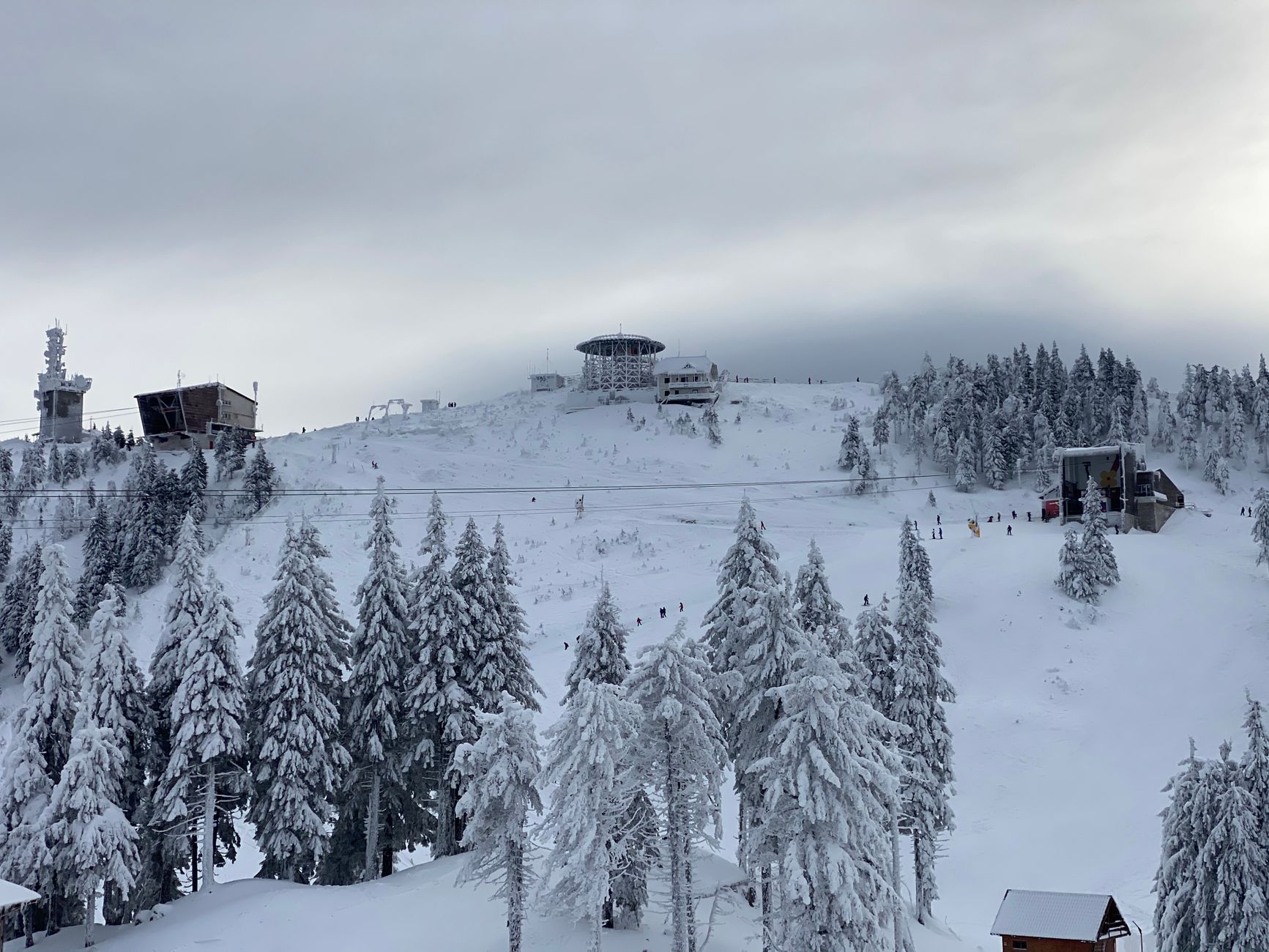
The honest window Vitosha actually delivers
Vitosha's marketing says December through April. The reality is tighter: reliable snow cover on the Aleko runs sits between roughly January 5 and March 15, with the best conditions in the second half of January and the first three weeks of February. December is a gamble — some years the lifts open in the second week, some years not until the 27th. Early April usually still has snow at the top station but the lower runs turn to slush by 11am. If a ski day is central to your trip, book for the first week of February and you’ll be right nine winters out of ten.
The comparison to Bansko, three hours south, is the one to hold in your head. Bansko has a longer season (mid-December to mid-April in most years), more snowmaking, a better lift system and a lively ski town. Vitosha has none of that — it has proximity. From a hotel bed in central Sofia you can be clicking into bindings within 90 minutes. Nobody flies to Bulgaria for Vitosha alone; people combine two ski afternoons with three city days, and that combination is genuinely good.
What a Vitosha ski day actually costs
A day lift pass at Aleko runs €24-€29 depending on midweek versus weekend. Rental for skis, boots and poles at the base sits at €16-€21, with helmets another €4. A group lesson through the ski school is €30-€39 for two hours. Add €7 for the Simeonovo gondola return if you don’t drive — total for a beginner's day, including one meal at the mountain hut, comes to about €82-€95. That's roughly half what the same day costs at Bansko once you factor in transfers and the higher pass price there.
The catch: Vitosha's lift infrastructure is old and creaky. The main Aleko chair breaks down two or three days each season and closes the resort outright. There is no snowmaking to speak of, so a warm January week ends the skiing entirely. Book your ski day for the middle of your trip, not the last day — if the mountain is closed you want time to reshuffle. The Vitosha lift Facebook page and the ski.bg site post morning updates by 8am; check both before leaving the hotel.
Getting up the mountain without a car
Two lifts run in winter: the Simeonovo gondola from the eastern edge of the city, and the Dragalevtsi chair from the southern edge. Simeonovo is the reliable one — enclosed cabins, runs in most weather, connects directly to the Aleko ski area at the top. Bus 122 from Hladilnika terminal (metro line 2) reaches the gondola base in 20 minutes and runs every 30 minutes on winter weekends. Total from central Sofia: about 70 minutes door to snow. Dragalevtsi is atmospheric but slower and closes in high wind.
Taxi from the centre to the Simeonovo base runs €10-€14 with Yellow or OK Supertrans; a Bolt is €8-€10. Ski-carrying is fine in both. Do not rent a car for a Vitosha day — the road to the gondola is narrow, poorly gritted, and parking at the base fills by 9am on Saturdays. The one exception is if you’re skiing three or more days and staying in Boyana; then a car makes sense but you’ll want winter tyres, which are legally required from November 15 to March 1 and which most rental firms include automatically in winter.
January cold and what a room costs in ski season
Sofia in January is the coldest capital in the EU after Helsinki. Daytime highs sit at 0 to 4°C, nights drop to -6 to -10°C, and a cold snap in the second half of the month can push nights to -15°C for a stretch of days. This is dry cold rather than damp — bearable if you dress for it — but it makes hotel heating a genuine variable to check. Older buildings converted to guesthouses in Oborishte can be underheated; the newer chain hotels around NDK and the business towers in Iztok are reliably warm.
Winter hotel rates split. Christmas and New Year (December 22 to January 3) run high: central four-stars at €130-€156, guesthouses at €65-€82. The whole of January outside those dates is the year's best value — the same four-stars drop to €82-€104, the guesthouses to €43-€56. February holds slightly higher than January because of Valentine's weekend and ski demand from Serbian and Romanian visitors. Skiers should book a hotel with a proper heated ski-storage room or at least a covered garage — not all do, and leaving wet gear in a wardrobe overnight is a mistake you make once.
The Christmas market and New Year premium
Sofia runs a proper Christmas market in the City Garden and along Tsar Osvoboditel from about November 28 to January 7. It's smaller than Vienna's or Budapest's but genuinely charming — mulled wine at €2, grilled sausages at €3, wooden stalls, an ice rink at NDK. The market draws Balkan weekend-break traffic from Belgrade, Bucharest and Thessaloniki, so hotel demand in central Sofia stays high right through the market's run. December weekends match August prices; December midweek is €26-€43 cheaper.
New Year's Eve itself is the single most expensive night of the year. Central hotels charge €191-€277 for a room that runs €95 the week before or after, and many bundle a mandatory gala dinner at €69-€104 per person. If you want a Sofia New Year, either book by mid-October or accept staying 15 minutes out and taking a taxi in. January 1 is dead — everything shut, taxis scarce, restaurants opening again on the 2nd. January 6 is the Epiphany cross-throwing ceremony at Alexander Nevsky, worth catching if you’re there; it happens at 11am and takes twenty minutes.
The spring turn and when to switch modes
March is Sofia's most awkward month. The ski runs go from good to unskiable across the middle two weeks, the parks are still bare, café terraces open on the first warm afternoon and close again the next day when it drops back to 3°C. Rates stay low — €74-€95 for the central four-stars — but the city doesn’t quite know what it is. If you’re coming in March, plan for museums, restaurants and thermal baths rather than outdoor time, and treat any warm afternoon as a bonus rather than the itinerary. Bring layers for a 15-degree daily swing.
By early April the pivot is complete: the Vitosha lift closes for the season around the 5th, the tree buds break in Borisova Gradina around the 10th, and terraces reopen for good. This is the shoulder-season sweet spot — hotel rates still at winter levels, weather turning genuinely pleasant, the year's first cherry blossoms in Doctor's Garden. If your trip has no ski component and you want cheap Sofia at its best, book April 5 to 25 and you’ll get a better city than most July visitors do, for half the price.
Who should visit in winter and who really shouldn’t
Winter Sofia works for: skiers wanting a cheap city-plus-mountain combo, thermal spa travellers (Bankya, Gorna Banya, and the Central Mineral Baths run all year), foodies who prefer heavy Bulgarian winter cooking to summer salads, and anyone who likes European capitals emptier and cheaper. The specific pairing of a €24 lift pass, a €87 hotel room and a €17 dinner of shopska salad and slow-cooked kavarma is not something Vienna or Prague offer. January and February deliver this reliably.
Winter Sofia does not work for: anyone whose trip depends on outdoor sightseeing beyond the central 1km, families with small children (the parks are frozen, indoor options are thin), and travellers who need long daylight — sunset is 4:50pm in late December. If any of those describe you, come in May or September instead. And if you’re set on Bulgarian skiing as the main event of the trip, skip Sofia's mountain entirely and go straight to Bansko — Vitosha is a bonus, not a destination in itself, and it's important to book the trip around what it actually is.
Questions, answered
Can I ski Vitosha as a complete beginner?
Yes — the ski school at Aleko runs beginner group lessons for €30-€39 for two hours, and the practice slopes near the top station are gentle and short. English-speaking instructors are standard. Rent gear at the base rather than in the city, and go on a weekday when the beginner area is half as crowded as Saturdays.
Is there any snow guarantee, or refund if the lift is closed?
No formal guarantee. If you buy a day pass and the lift then closes mid-morning for wind or breakdown, you can usually exchange it for another day within the season. Hotels don’t refund for closed lifts. This is why booking ski days for the middle of a trip rather than the last day matters practically.
How does Sofia in January compare to Prague or Budapest for a winter city break?
Sofia is 30-40% cheaper on hotels and food, colder by 3-5 degrees, has genuine skiing 40 minutes away, and has thinner Christmas-market and cultural infrastructure. If cost and skiing matter most, choose Sofia. If Christmas markets and pretty snowbound old towns matter most, choose Prague or Budapest. Both are valid answers for different travellers.
What should I pack for a February Sofia trip that includes one ski day?
A proper winter coat rated to -10°C, waterproof boots (Sofia pavements ice over), thermal base layers, and gloves. For the ski day, rent everything except base layers and gloves at Aleko — hauling ski gear from home for one day is not worth it. Sunglasses matter more than you’d expect; February sun on snow is intense.
Doing good is the business: every booking through Stay Sofia funds one verified tonne of carbon removal — same room, same price, no markup.
Start your search