08:30 — Start at the Central Mineral Baths
Begin at the yellow-and-white Central Mineral Baths on Banski Square, in Serdika. The Sofia History Museum inside opens at 10:00, so use the first hour for the free outdoor drinking fountains along the north wall — locals arrive with 5-litre bottles for the 46°C water and you should taste it warm from the tap. Walk two minutes to Banya Bashi Mosque (still active, so peek in between prayers) and the Sofia Synagogue on Ekzarh Yosif Street. All three sit inside a 200-metre triangle with the Halite covered market as the fourth corner. Grab a banitsa and boza at Furna on the market's ground floor for about €2.
At 10:00 buy the €3 combined ticket for the History Museum. Ninety minutes is enough: skip the medieval rooms, prioritise the Thracian gold on the first floor and the 1878 liberation displays. You leave with the spine of Bulgarian history in your head, which makes every later stop legible. If the queue is long — it rarely is on weekdays — head straight to stop two instead and loop back before closing at 18:00. The building itself, a 1913 hammam by the same architect as the Vienna Volksoper, is worth the entry alone.
10:30 — The Serdika archaeological complex
Cross under Maria Luiza Boulevard into the open-air Serdika ruins, the Roman city that sat beneath modern Sofia until Metro Line 2 dug it up in 2010. Entry is free and you can walk the 4th-century decumanus in about 40 minutes. The Church of St. George Rotunda, tucked inside the Presidency courtyard, is the oldest surviving building in the city (4th century) and holds three layers of frescoes. The changing of the guard happens on the hour — a small ceremony, worth timing your visit for 11:00 exactly. Photography is fine outside; inside the rotunda, no flash.
From here it is a straight 400-metre walk east along Saborna Street to the next cluster. Resist the souvenir shops on this stretch — the rose oil is overpriced by a factor of three compared to what you will find at the Zhenski Pazar market later. The pavement is uneven cobble, so this is not a heels day. If it is raining, the underpass at Serdika metro station connects the rotunda to St. Nedelya Church without surfacing, which matters in a January downpour.
12:00 — St. Nedelya, Vitosha Boulevard, lunch
St. Nedelya Church, site of the 1925 bombing that killed 150 people, anchors the south end of the old core. Ten minutes inside is enough. Then walk down Vitosha Boulevard, the pedestrianised spine of Triaditsa, as far as NDK (the National Palace of Culture) — about 900 metres of shops, cafés and, on a clear day, Vitosha mountain filling the view straight ahead. For lunch, turn left onto Solunska Street and eat at Made in Home or Manastirska Magernitsa: a proper sit-down Bulgarian lunch with shopska salad, kavarma and a glass of mavrud runs €16-€22 per person.
Do not eat on Vitosha Boulevard itself. The restaurants there charge a 40% surcharge for the address and the food is uniformly weaker than what sits one street back. If you are on a tight budget, Supa Star on Tsar Shishman serves seven soups daily at €3 a bowl and is the single best cheap lunch in the centre. Book nothing for lunch on a weekday — walk-ins are fine before 13:30.
14:00 — The cathedral quarter
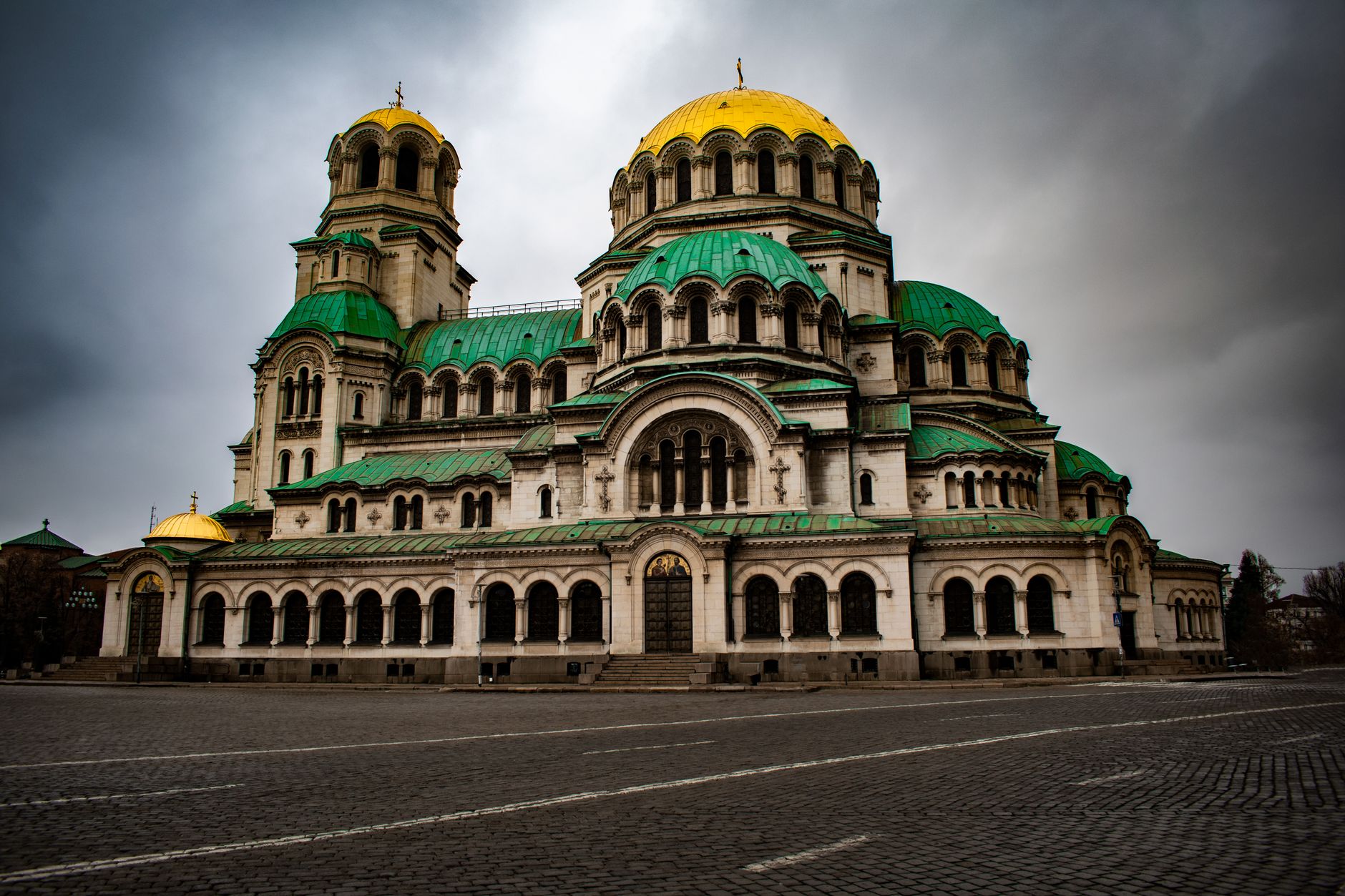
Walk 15 minutes north-east through the yellow-brick streets of Oborishte to Alexander Nevsky Cathedral, the postcard building. Entry to the nave is free; the crypt museum of Orthodox icons costs €4 and is one of the finest icon collections in Europe — allow 45 minutes. Immediately opposite sits St. Sofia Church (6th century, the city's namesake) with a €3 underground necropolis you can walk through on wooden boardwalks. The two together make sense as a pair: the cathedral is 1912 nationalist architecture, the necropolis is Late Antiquity, and the contrast tells you what the country has been arguing about for a hundred years.
Coffee break at this point is non-negotiable. Fabrika Daga on Oborishte Street or Dъb on Shipka do proper flat whites for €2 and have seats outside under lime trees in warm months. If you need a rest indoors, the National Gallery in the former royal palace on Battenberg Square is a five-minute walk south — €3 entry, an hour is plenty, and the Bulgarian modernist rooms on floor two are the reason to go.
16:30 — Boyana or the Ivan Vazov quarter
Here the day forks. If you want the UNESCO tick, take tram 5 from NDK or a €7 taxi to Boyana Church in the foothills — a tiny 13th-century chapel with frescoes that predate the Italian Renaissance by 150 years. Entry is timed, €4, and you get exactly 10 minutes inside because of humidity control. Combined with the National History Museum next door (€5), this eats two hours and gets you back to the centre by 19:00. Do this only if Byzantine art is a real interest; otherwise skip.
The alternative is to stay central and walk the Ivan Vazov quarter south of NDK — leafy interwar streets, the Military Club, the Russian Church of St. Nikolai with its gold onion domes on Tsar Osvoboditel, and Crystal Garden where local chess players occupy the same benches they have used since 1962. This is Sofia at its most liveable, and 90 minutes of unstructured wandering here will teach you more about the city than another museum. Finish at the yellow cobbles outside the former royal palace at sunset.
19:30 — Dinner and one last drink
For dinner, book Cosmos on Lavele Street (€30-€39 per person, modern Bulgarian, book two days ahead) or Hadjidraganov's Cellars on Kozloduy for the full folk-music-and-rakia experience (€22-€26, walk-in usually fine). Cosmos is the honest recommendation if you want to understand where Bulgarian cooking is now; Hadjidraganov's is the honest recommendation if you want to enjoy yourself. Both are 10 minutes by taxi from any central hotel. Avoid the tourist places on Pirotska — they are fine, but you can eat that food better elsewhere.
For a final drink, Hambara on 6 Septemvri Street is a candlelit cellar bar with no sign on the door (look for the wooden gate) that has been open since the 1990s. Beer €3, rakia €2, closes at 02:00. If you want something newer, One More Bar in the same block does proper cocktails for €7-€9. Skip the strip clubs disguised as bars on Sveta Nedelya Square — they are the one genuine tourist trap in central Sofia.
Where to sleep
For one night, stay central so you do not lose morning time to transit. The four-star business hotels between NDK and the cathedral run €78-€121 in shoulder season and put every stop on this itinerary within a 15-minute walk. The 19th-century townhouse boutiques in Oborishte, north of the cathedral, cost €95-€147 and are the more atmospheric choice if you can get a room — they book out three weeks ahead for weekends. Both categories include breakfast, which matters when your train leaves at 07:00.
Avoid the airport-adjacent hotels in Mladost for a one-night stay: the metro is fast (30 minutes, €2) but you will burn an hour of your day on the round trip. The hostels on Lavele and Positano streets in Vazrazhdane are excellent value at €16-€22 a dorm bed and put you five minutes from Serdika, but for a single tight day I would spend the extra €52 on a proper hotel and a proper breakfast. You are here for the city, not to save money on sleep.
Questions, answered
Is one day actually enough for Sofia?
For the centre, yes. Sofia's headline sights sit inside a 2-kilometre square and this itinerary hits nine of them. What you lose is Vitosha mountain, the Boyana-Dragalevtsi foothills, and any day trip to Rila or Plovdiv. If those matter, budget two days minimum.
Should I buy the Sofia City Card?
Only if you plan to enter four or more paid museums. The card costs €19 for 24 hours and covers most sights on this route plus public transport. For the itinerary above — three paid entries totalling €10 — you save money paying at the door.
How much should I budget for the day?
Roughly €52-€69 per person covers museum entries (€10), two meals and coffee (€26-€35), a taxi to Boyana if you go (€14 return), and evening drinks. Skip Boyana and eat at Supa Star and you can do the whole day for €35.
What if it rains all day?
The underground Serdika ruins, the two churches, the History Museum, the National Gallery and the icon crypt are all covered. You lose Vitosha Boulevard as a walk but the metro connects most of the route. Add Sofia's Regional History Museum in the mineral baths — the whole thing works indoors.
Doing good is the business: every booking through Stay Sofia funds one verified tonne of carbon removal — same room, same price, no markup.
Start your search