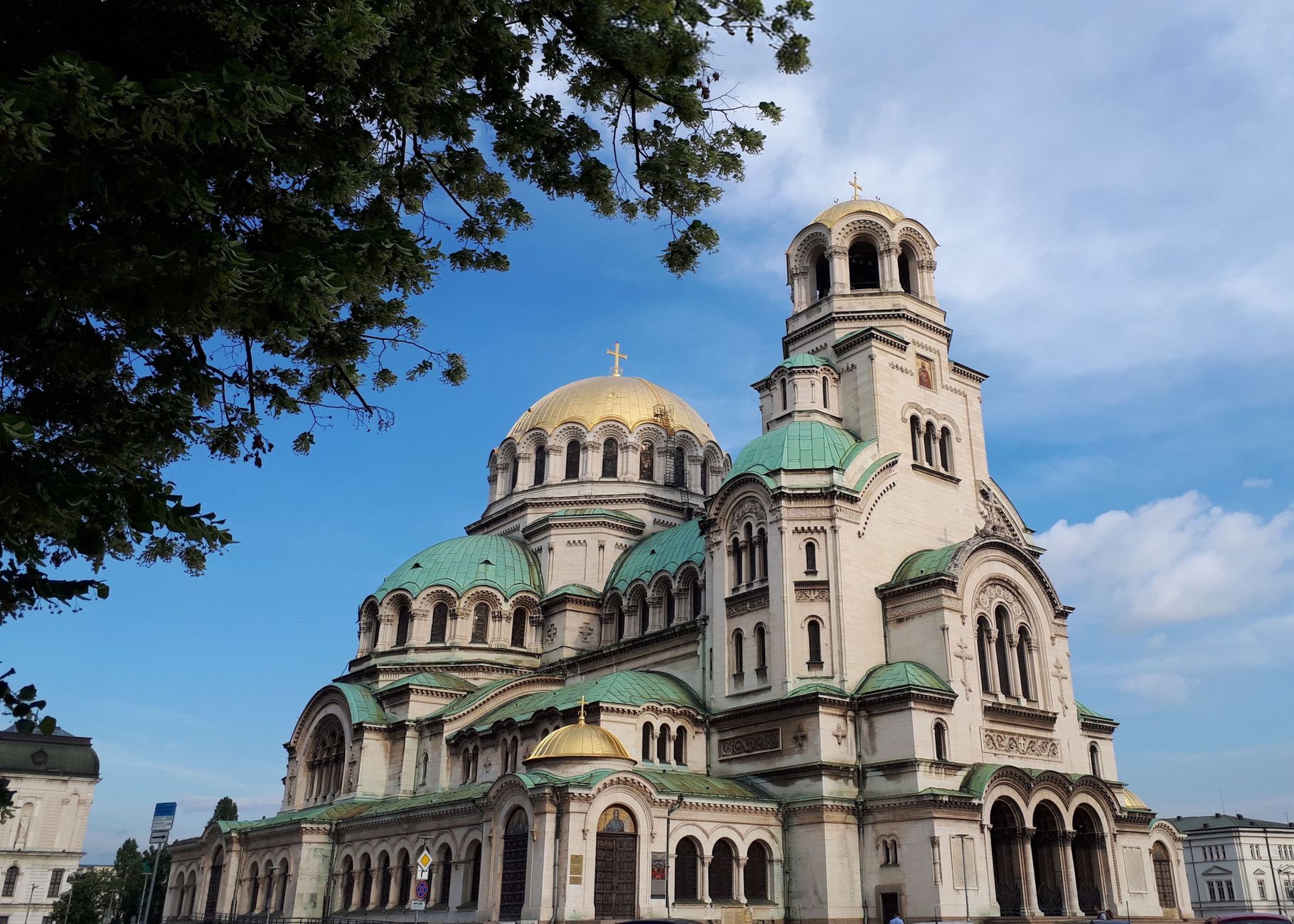
Why summer is the real high season, not the shoulder
Sofia-Grad's high season runs a narrow window: roughly June 20 to September 5, with the sharp peak sitting across the last week of July and the first three weeks of August. That is when the mountain-hiking crowd, the transit travellers routing through the airport for Greek and Turkish beaches, and the summer conference calendar all overlap. Central three-star doubles that sit at €61-€74 in April push to €95-€121. The four-stars around NDK and Vitosha Boulevard, which quote €113 in low season, hold firm at €156-€191. Weekend rates run higher than midweek — the reverse of the business-city pattern most of the year.
The catch nobody warns you about: many Sofians themselves leave in August. Family-run mehanas around Slaveykov Square shut for two or three weeks, small galleries in Oborishte close outright, and the neighbourhood barbers on Graf Ignatiev put up handwritten notes. You get a strange split city — the tourist axis from Serdika to NDK is packed, and the residential streets a ten-minute walk east feel emptier than in February. Plan the eating around what stays open: hotel restaurants, the bigger Made in Home / Cosmos / Hadjidraganov's chains, and anything on Vitosha Boulevard itself.
What the weather actually does in July and August
Daytime highs sit at 28-32°C through most of July, spiking to 35-37°C for four or five days at a time in the heatwaves that now arrive almost every summer. Nights drop to 17-19°C in the centre, which is warm enough that any hotel without functioning air conditioning becomes unbookable — check the reviews for the phrase 'AC weak' before paying. Humidity is moderate, not oppressive, but the concrete of the old socialist blocks holds heat until 2am. Thunderstorms roll off Vitosha two or three afternoons a week, typically between 4pm and 7pm, dropping the temperature 8-10 degrees in twenty minutes.
August is drier and slightly hotter on average, with fewer storms but longer stretches of 33°C-plus. This is when the escape to Vitosha itself becomes the point of the trip: the gondola from Simeonovo runs daily in high season, and the top station at Aleko sits at 1,800m where the air is 10 degrees cooler than the boulevards. Locals do this constantly in August — a 40-minute journey buys you a jumper-weather afternoon. Budget €7 return for the lift and another €13-€17 for lunch at one of the mountain huts.
The August 15 pivot and what closes around it
Bulgaria doesn’t observe August 15 as a formal public holiday the way Italy or France do, but the week around it functions as the annual shutdown regardless. Small independent restaurants — the kind with eight tables and a chalkboard — commonly close from about August 10 to August 25. The Museum of Socialist Art keeps summer hours but the smaller literary and ethnographic collections in Oborishte cut back to three days a week. The Sofia Opera goes dark for the whole month; the National Theatre reopens in early September. If your trip depends on a specific cultural event, check the calendar in July, not on arrival.
What stays open and gets busier: the Central Mineral Baths and the free public hot-water fountains behind them, Borisova Gradina park, the Vitosha lift, the day-trip operators to Rila Monastery and Plovdiv, and the rooftop bars — Sense, Cosmos, and the terrace at Grand Hotel Sofia are booked out three nights ahead on August weekends. Reserve rooftop tables when you reserve the hotel, not on the day. Ground-floor restaurants along Vitosha Boulevard rarely need bookings even in peak week; the terraces do.
What a room actually costs, by area and week
Central four-stars in Sredets and around NDK run €147-€199 through July and August, with the last week of July and first two of August at the top of that band. The business hotels toward Iztok and Izgrev — quieter, further from bars, closer to the metro — drop to €104-€139 because their corporate clients are on holiday. This is the best-value pocket in high season if you don’t mind a 15-minute metro ride to the centre. Guesthouses and apartments in Oborishte and Lozenets sit at €65-€95 for a decent one-bedroom, which is where I’d put a couple on a mid-range budget.
Weekend surcharges are real: Friday and Saturday nights add €22-€35 to the same room. If your trip has any flexibility, arrive Sunday and leave Thursday. Booking window matters more in August than any other month — the good mid-range rooms in the centre go 10-14 days ahead, not on the day. The one exception is the airport-strip hotels near Terminal 2, which almost always have space and cost €52-€69 including shuttle. Fine for a one-night layover, wrong for a city break.
Festivals, concerts and the summer street calendar
Sofia's summer festival calendar is thinner than Plovdiv's or Varna's but does exist. A Muse of Fire opens the outdoor theatre season in late June around the Ivan Vazov Theatre garden. Sofia Summer Fest runs jazz and world music evenings in Borisova Gradina through July, mostly free or €7-€13 a ticket. Opera in the Park brings staged productions to the same park in the first week of July — the tickets sell out but standing spots on the grass are open. The Vitosha Boulevard car-free evenings on Fridays turn the whole strip into a street market from late June through early September.
The gap on the calendar: nothing at the scale of Kaliakra Rock Fest or the Plovdiv old-town festivals. Sofia's serious cultural season is autumn to spring, and August is when the city consciously exhales. If you want a summer trip built around events, pair two Sofia nights with three in Plovdiv (mid-July has the Opera Open there) or with a Rila-Rhodope hiking week. As a city-only summer destination, Sofia is honestly a soft eight — pleasant, walkable, cooled by Vitosha, but not the peak of what it does.
School holidays and the domestic travel pattern
Bulgarian schools break from about June 15 to September 15 — a full three months, longer than most of Europe. This shapes hotel demand less than you’d expect because most Bulgarian families with means head to Sunny Beach, Golden Sands or Greek Halkidiki rather than staying in Sofia. What it does affect: the parks, the pools and the family attractions inside the city are busy every day, not just weekends. Sofia Zoo, the Muzeiko children's museum in Studentski, and the outdoor pool at Spartak run at capacity through July. Buy Muzeiko tickets online — the queue at the door easily runs 40 minutes on weekday mornings.
The counter-pattern: mid-August through early September, Sofia sees Bulgarian families returning from the coast and stopping a night or two before scattering back to Plovdiv, Burgas and Varna for school prep. Sunday-night hotel demand ticks up unexpectedly around August 25-30. And the 15 September school-start day is a genuine city event — flowers everywhere, parents in suits, small ceremonies at every school gate. It's a lovely thing to witness if you happen to be there, and it marks the honest end of high season. Rates drop 20% the following week.
The honest verdict on a July or August visit
If you can pick your dates, skip the last week of July and the first two of August. Aim instead for the last ten days of June, when the weather is already summer but hotel rates haven’t jumped, or the first two weeks of September, when the city refills, the theatres reopen and daytime highs settle at a perfect 24-27°C. Both windows give you the good side of summer — patios, mountain lifts running, long evenings — without the shutdown feel and the premium pricing. Restaurant bookings become optional again, and you can walk into the rooftop bars.
If your dates are fixed inside the peak, lean into the mountain: base yourself in Boyana or Dragalevtsi rather than the centre, budget the gondola into every second day, and eat late — Sofia's kitchens quietly serve until 11pm in summer, which is when the temperature is bearable. Skip the ambitious day trip to Rila on any day forecast above 34°C; the monastery courtyard is beautiful but sun-blasted, and the bus is a slog. Substitute the Seven Rila Lakes lift day or a Bankya spa afternoon. High season done well is still a good trip; done wrong it's a hot, half-shut disappointment.
Questions, answered
Is Sofia's airport busier in summer and does it matter?
Yes, Terminal 2 handles roughly double its winter passenger count from mid-June to mid-September, mostly transit traffic to Greek and Turkish beach resorts. Arrivals at 6-9am and 10pm-1am get congested. Allow 90 minutes for departures in July and August, and prebook an airport transfer for €16-€22 rather than queuing for taxis.
Do I need air conditioning in a Sofia hotel in August?
Yes, without exception. Nighttime lows stay above 17°C and the city holds heat until well past midnight. Any listing that describes AC as 'available in summer months' or 'on request' is signalling a weak system. Pay the extra €13-€17 a night for a hotel that lists AC as a standard room feature and confirms it in recent reviews.
Are Rila and the Seven Lakes doable as day trips in high season?
Rila Monastery works as a full-day trip year-round, budget €39-€52 for a shared van from Sofia. The Seven Rila Lakes require the chairlift from Panichishte, which runs daily July through mid-September. Go on a weekday — weekend queues at the lift can hit 90 minutes. Both trips start at 7am from Sofia and return by 8pm.
When exactly do high-season prices end?
The drop happens the week of September 7-14, not September 1 as many booking sites assume. That first week of September still trades on summer weather and the last of the school holidays. From roughly September 15 onward, four-star doubles fall from €173 to €113-150 and stay there through October — the best-value window of the year.
Doing good is the business: every booking through Stay Sofia funds one verified tonne of carbon removal — same room, same price, no markup.
Start your search