What this loop actually is
Vitosha is not a single peak you drive up and back down — it is a 20-kilometre-long mountain massif that sits on Sofia's southern edge, and there is a road that runs three-quarters of the way around it. The full loop is roughly 95 kilometres including the return leg, and it takes 6-7 hours with stops. You leave central Sofia via Boyana in the morning, climb the western flank to Zlatnite Mostove and Aleko, cross over the shoulder to the villages of Bistritsa and Zheleznitsa on the eastern side, and come back into the city through Pancharevo Lake. It is one of the great short drives in the Balkans and almost nobody does it.
You need a rental car — buses do not link the eastern and western sides of the mountain. Reserve one from any of the airport or NDK-area agencies, expect €35-€48 a day for a compact with unlimited mileage, and take the mid-size if there are two of you plus luggage because the mountain road is narrower than you think. Fuel is €1-€1 per litre. The loop uses about 8-10 litres, call it €12 in petrol. No tolls anywhere on this route. Roads are paved throughout but sections above 1,400 metres get patchy in the shoulder edges.
Stop 1 — Boyana Church and the National History Museum
Leave central Sofia at 09:00. Twenty minutes south-west via Bulgaria Boulevard puts you in the village of Boyana at the mountain's foot. Park in the free lot next to the National History Museum. Do the museum first (€5, 90 minutes) — the Thracian gold rooms alone are worth the drive, and the building is the former Communist Party residence, which is a bonus. Walk five minutes downhill to Boyana Church for the 10:30 or 11:00 timed entry (€4). Ten minutes inside, and the 1259 frescoes will stay with you.
By noon you are back at the car and heading uphill. This is the moment to fill up on water and a sandwich if you have not eaten — the shops in Boyana village on Bulgaria Boulevard are the last real supermarket for the next 40 kilometres. There is a snack bar at Zlatnite Mostove but it is unreliable outside July-August. Petrol likewise: fill up in Boyana. The road narrows fast above 1,200 metres and you do not want to be looking for fuel with a warning light on the Vitosha ridge.
Stop 2 — Zlatnite Mostove and the moraine river
The road climbs 700 metres of altitude in about 12 kilometres of switchbacks — not technical, but slow. At 1,400 metres you reach Zlatnite Mostove (the Golden Bridges), a huge stone river of boulders left behind by the last ice age. Free parking, a wooden walkway across the boulder field, and a small café that opens weekends year-round and weekdays June-September. Allow 45 minutes to walk out onto the stones. This is the classic Sofia weekend picnic spot and on a Sunday in June it is genuinely crowded — go on a weekday and you will have it.
From Zlatnite Mostove, continue the ridge road eastward to Aleko hut at 1,800 metres — another 8 kilometres and about 25 minutes. Aleko is the winter ski centre and the summer trailhead for Cherni Vrah (2,290 m), the summit. If you have time and boots, the summit walk is 90 minutes each way on a marked, non-technical path. If not, the Aleko café (€3 coffee, €5 soup) is a legitimate lunch stop and the view over the city from the terrace is the reason to come. Weather changes fast here — bring a windproof even in August.
Stop 3 — Crossing to the eastern side
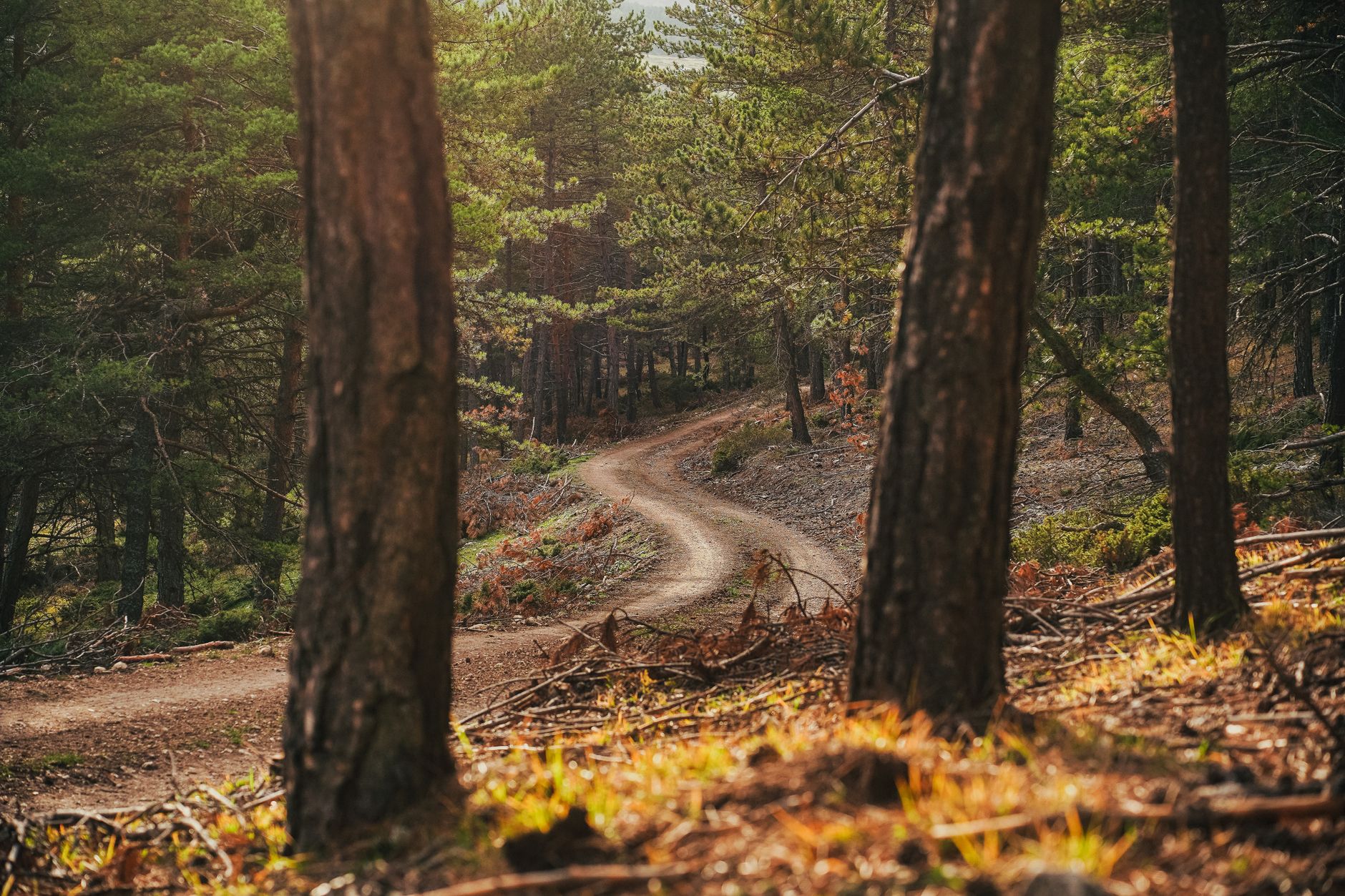
From Aleko, do not go back the way you came. The road continues south-east down the mountain's back side toward the villages of Bistritsa and Zheleznitsa. It is a slow descent — 15 kilometres over 30-40 minutes because of switchbacks — through pine forest and open meadows. This is the empty side of Vitosha. You will see maybe five cars in an hour. The forest gaps offer views south into the Plana mountain range, and in September the beech turns proper orange-red. Stop wherever a lay-by opens for a photograph.
Bistritsa village sits at 900 metres and is one of the villages that got absorbed into greater Sofia in 1979 — still rural in feel, with 19th-century stone-and-wood houses and a small church worth 15 minutes. Zheleznitsa, another 4 kilometres east, is where you eat lunch if you did not eat at Aleko. Try Mehana Zheleznitsa (Bulgarian tavern, €10-€16 per person, garden seating May-October) or the newer Vodenitsata mill restaurant on the stream. This is Sofia's Sunday lunch belt — locals drive out for exactly this meal — and it is where a rental car earns its cost.
Stop 4 — Pancharevo Lake
From Zheleznitsa, drive north 10 kilometres to Pancharevo Lake, an artificial reservoir on the Iskar River built in the 1950s. The lake is Sofia's weekend swimming and rowing spot from May to September — water temperature 18-22°C in July-August. There is a beach at the north end with a swimming zone marked by buoys, €2 entry, changing rooms, and boat rental at €9 an hour for a two-person pedalo. Even if you are not swimming, an hour walking the eastern shore path is a good way to break up the drive.
The village of Pancharevo has two things worth stopping for: the neo-Byzantine Church of St. Nedelya (free, 10 minutes, unusual painted interior) and the row of fish restaurants along the lake front. Ribarska Sreshta is the standard choice — grilled trout from the lake, €10-€14 per fish including sides, and outdoor tables over the water. This makes a strong late-afternoon coffee stop rather than a full meal if you ate at Zheleznitsa. From here it is 15 kilometres back into central Sofia via the Tsarigradsko Shose motorway.
Stop 5 — Optional: Dragalevtsi and the chairlift
If you have started early and have energy left, add Dragalevtsi village on the return leg — it sits on the mountain's north-eastern shoulder and adds about 8 kilometres to the drive. Dragalevtsi Monastery is a small 14th-century foundation, free entry, 20 minutes; the frescoes are less spectacular than Boyana but the setting under beech trees is more peaceful. From the village, the 1950s chairlift climbs to Bai Krastyo hut at 1,500 metres — €5 return, runs weekends year-round, and offers a completely different angle on the city than the summit views earlier.
Do this only if you skipped the Cherni Vrah walk and have time to kill before dinner. Otherwise it is a detour that pushes you past 8 hours on the road and into evening traffic on the way home. Sofia's rush hour between 17:00 and 19:00 on weekdays adds 30-40 minutes to any return via Tsarigradsko Shose. Time the drive so you re-enter the city before 16:30 or after 19:30. On a Sunday, no traffic — you can arrive back at your hotel at any time and the streets will be empty.
The car — where to rent, where to park
Rent from any of Sixt, Europcar or Top Rent Sofia — the last is the local operator and cheapest at €33-€39 a day for a compact. Airport pick-up costs €7 extra but saves an hour if you are picking up on arrival day. Central pick-up is on the NDK ring road or Vitosha Boulevard south end. Automatic transmissions are more expensive (€43-€56) and worth it only if you cannot drive manual; the mountain road has enough gear changes to justify a manual you know. Insurance: take the full waiver, €9-€10 a day, because the mountain lay-bys are gravel and parking dings are real.
Parking in central Sofia is metered zone 1 (blue lines, €1 per hour, maximum two hours) and zone 2 (green lines, €1 per hour, maximum four hours), 08:00-20:00 weekdays and 08:00-18:00 Saturdays. Sundays are free. Most central hotels offer parking at €9-€13 a night — book this ahead of the car. Do not leave anything visible in the car overnight anywhere in the city. On the mountain loop itself, all parking is free but crowded on July-August weekends; a weekday drive avoids the problem completely.
Where to sleep after the drive
If you are doing this loop as a day trip out of Sofia, sleep in the centre — anywhere within a kilometre of Sveta Nedelya or the cathedral. Four-star hotels with parking run €91-€139 including the space in a secure garage, and after 7 hours on the road you will not want to hunt for a street spot at 20:00. Look specifically for hotels advertising 'garage parking' rather than 'street parking with permit'; the difference is real and the permits do not always work as promised.
An alternative that changes the experience: sleep in Boyana or Dragalevtsi. Small guesthouses in these villages run €52-€78 a night, sit on the mountain's flank with garden or forest views, and put you 20 minutes from central Sofia by car. This makes the loop a proper mountain weekend rather than a city day trip. The trade-off is that you cannot walk to a restaurant at night — you drive to dinner in Sofia or you eat at the guesthouse. For a two-night stay with the drive on day two, this is honestly the better sleep. For a one-nighter, stay central.
Questions, answered
Can I do this loop without a car?
Not as a loop. Bus 66 from Hladilnika metro reaches Aleko in summer, and bus 64 reaches Zlatnite Mostove — but there is no public transport between the eastern and western sides of the mountain. You can do half the loop as an out-and-back for €2 each way plus a €10 taxi to Boyana, but the crossing to Bistritsa requires a car or a €43-€61 taxi day rate.
What's the best time of year for the drive?
Late May through early October for the full loop with Aleko accessible. December-March the Aleko section is snow-closed above 1,600 metres — the loop becomes an out-and-back to Zlatnite Mostove on the west and Pancharevo on the east. September is the best single month: warm, dry, no crowds, autumn colour at altitude.
How difficult is the driving?
Not difficult, but slow. Paved throughout, no gravel, no fords, no gradients above 8%. The only technicality is switchbacks between 1,200 and 1,800 metres where meeting a bus requires care — pull over, do not reverse. Total road time is about 3 hours; the rest is stops. Any driver comfortable on a two-lane mountain road can do this.
Should I do this before or after seeing central Sofia?
After. The drive makes more sense once you have oriented yourself in the city — you will recognise Vitosha's peaks from the terraces where you drank coffee, and Boyana Church will land harder when you have already seen the National Gallery's medieval room. On a three-day trip: city day, drive day, city day.
Doing good is the business: every booking through Stay Sofia funds one verified tonne of carbon removal — same room, same price, no markup.
Start your search