Transport
Is Sofia accessible? The honest wheelchair and mobility guide
The metro is a genuine win, the pavements are a genuine problem, and the gap between the two defines a Sofia trip on wheels — here's what actually works across 7 city systems.
The metro: Sofia's one unambiguous accessibility success
All three Sofia metro lines — M1, M2, M3 — have lifts at every station, level boarding onto the trains, and tactile paving throughout. This is not the norm in Balkan capitals and it is genuinely excellent. A wheelchair user can travel from Sofia Airport (M4 line, Terminal 2 station) to Serdika, NDK, Vitosha, or Business Park Mladost without ever climbing a step. Lifts run reliably; when one is out, staff at the barrier will radio ahead and route you via the neighbouring station. The one-ride ticket at about €1 is the same as everyone else pays.
The catch is the connection between lines at Serdika, where the interchange involves a longer corridor with two lift transfers; allow 8-10 minutes, not 3. Rush hour (8-9am, 5-7pm) fills carriages and the priority spaces get taken by commuters with backpacks who genuinely will move if you say 'izvinete'. Metro staff are visibly present at every major station and will help physically if asked. This is the single biggest reason to base a mobility-limited Sofia trip near a metro station rather than a picturesque cobbled backstreet.
Pavements and cobblestones: the daily reality
Central Sofia's pavements are a patchwork of Soviet-era slabs, newer concrete, tram tracks, and — in the historic core around the Palace of Justice, Alexander Nevsky and Vitosha Boulevard's older stretches — the notorious yellow paving bricks, which are polished, uneven, and treacherous in the wet. Curb cuts exist but not universally; expect to detour to a proper crossing every second block. Wheelchair users report the 500m from Serdika metro to the Nevsky Cathedral as one of the harder stretches in the centre, purely because of surface quality.
Newer developments are much better: Paradise Center mall in Vitosha district, the Business Park in Mladost, the redeveloped stretch of Graf Ignatiev after its 2020 refit, and most of Boulevard Vitosha are broadly step-free with continuous smooth paving. Parks — Borisova Gradina, South Park, Zaimov Park — have paved main paths that are entirely rideable. Boyana Church and the National History Museum have accessible entrances but the approach from the parking area involves gradients around 8%, doable with a companion, hard solo.
Trams and buses: mixed picture, improving
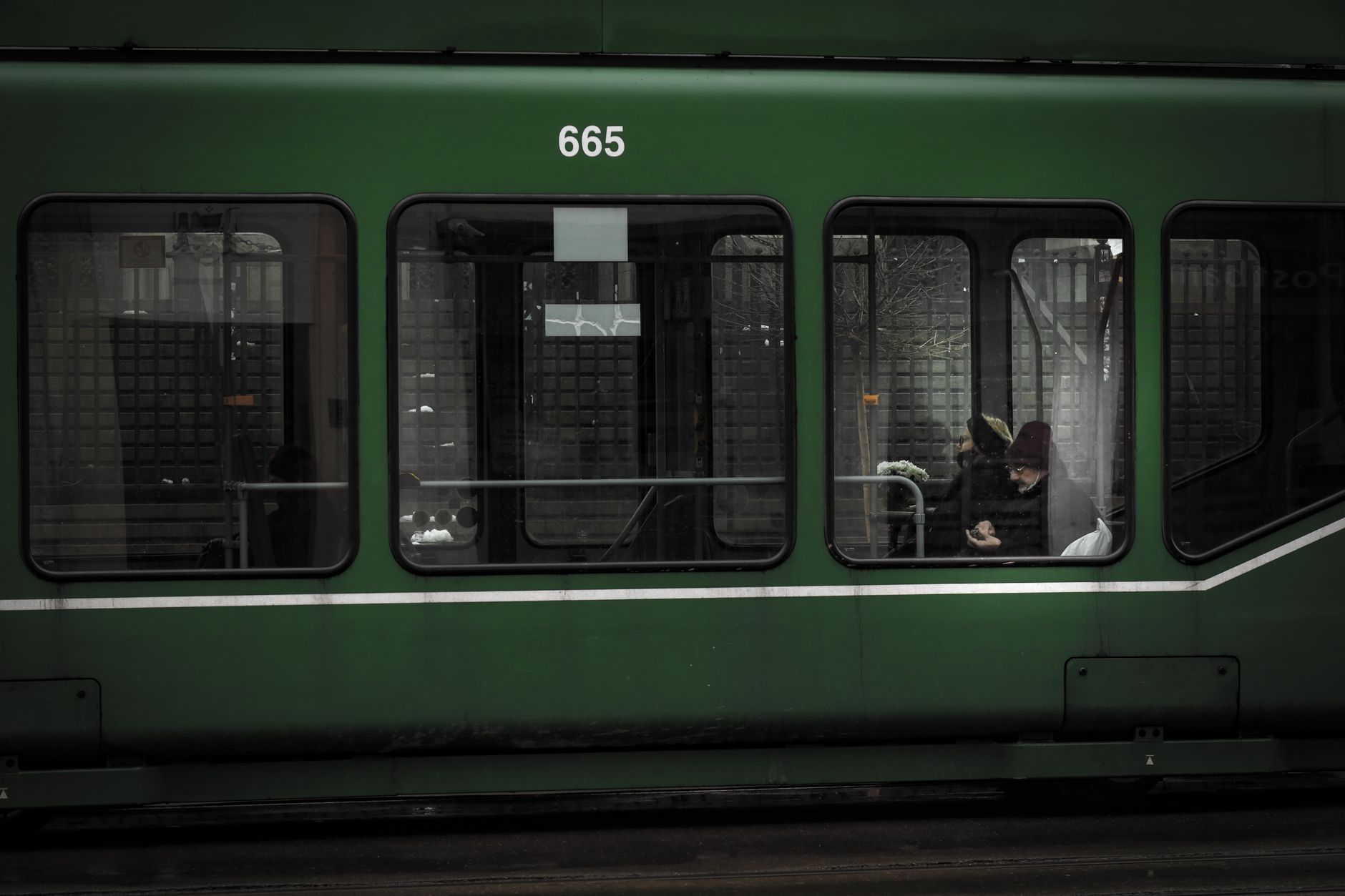
Sofia's tram network runs a mix of ancient Czech-built Tatra trams (high floor, three steps, not accessible) and newer PESA and Inekon low-floor trams which board level from raised platforms. Lines 22 and 20 have the highest low-floor share. The problem is you can’t reliably predict which tram will arrive; the timetable doesn’t say. Buses are better — the newer Yutong and Solaris fleet on most central routes are all low-floor with a manual ramp the driver deploys on request. Say 'ramp, molya' pointing at the doors and it works.
Trolleybuses on routes like the 1, 2, 5, 9 are increasingly low-floor Skoda models, but rural-edge routes to Bankya, Novi Iskar or upper Boyana still use older vehicles. The wheelchair space is at the middle door; a fold-down bench and a securement strap are provided but rarely used by locals, who lean instead. Drivers are helpful when asked; other passengers will make space. Real-time info on the SofiaTraffic app now flags accessible vehicles, though the data is 70% accurate at best — plan a plan B.
Taxis and Bolt: the practical middle option
Standard Bolt cars are sedans with normal doors, fine for someone who can transfer from a wheelchair to a car seat and fold the chair into the boot. Drivers will help load; tipping €1-€2 in cash covers the extra effort. For non-transferring wheelchair users, Bolt has a limited 'Bolt Assist' option in Sofia with a handful of accessible vans, but supply is thin and pre-booking through the app the day before is essential. The registered accessible taxi service is run by Yellow 333 with two adapted vehicles; call 02/91-263 in advance.
Costs are reasonable: a cross-city Bolt from Mladost to the airport runs €7-€10, from the centre €5-€8. An accessible van transfer through a hotel concierge runs €26-€39 for the airport, worth it if you’re travelling with a rigid frame chair or a scooter. The rental car option opens up further: Sixt and Hertz at Sofia Airport can provide hand-controls with two weeks' notice, and parking in central Sofia is genuinely dire, so unless you’re day-tripping to Rila, Plovdiv or the Vitosha ski roads, don’t bother.
Hotels: what to check before you book
Four-star and five-star international-chain hotels in Sredets, Oborishte and near NDK — the Sofia Hotel Balkan, Grand Hotel Sofia, Hyatt, Sense, Novotel and the Marriott-flag properties — have proper accessible rooms with roll-in showers, grab bars and lowered switches. Ask specifically for 'accessible room' when booking and confirm 48 hours before arrival; the rooms exist in small numbers and get released to general inventory if not held. Prices run €95-€156 a night for these, which is the correct band for step-free confidence in Sofia.
Three-star hotels and boutique guesthouses in the historic core are more variable; many are in older buildings with a step or two at entry, narrow lifts (or none), and bathrooms retrofitted around plumbing that can’t move. Read the last 30 reviews with 'accessible' or 'wheelchair' as a keyword before booking. Apartment rentals via Booking.com and Airbnb in the newer Mladost, Iztok and Studentski blocks often have lifts and level entry — cheaper at €43-€69, but check specifically for the building's front-door step, which listings rarely photograph.
Sights: what works, what to skip
Works well: Alexander Nevsky Cathedral (ramp at the side entrance, level floor inside), the National Palace of Culture (fully accessible, lifts throughout), Vitosha Boulevard (flat, smooth, café-lined), Borisova Gradina park's main paths, the Central Market Hall, Sofia History Museum in the old Central Baths (lifts, accessible toilets), the Museum of Socialist Art (level, ramped). South Park is enormous and largely step-free. The National Art Gallery in the former royal palace has lifts and accessible routes throughout its 2023 refit.
Harder or impossible: the Boyana Church itself has a stepped entry and a cramped interior — the exterior is worth the trip, the interior may not be workable; Rila Monastery day trip is doable but the monastery courtyard has uneven cobbles and the church interior has a step; Vitosha Mountain via the Simeonovo gondola is out of order for wheelchair access as of 2026; Bankya's mineral baths vary wildly. The synagogue and the mosque are both step-free at the ground floor with prior arrangement.
Companions, equipment rental, and the safety net
There is no dedicated tourist assistance service at Sofia Airport equivalent to a UK 'Passenger Assist', but the airport itself is fully accessible and staff will help on request — book assistance through your airline at least 48 hours before flying, using code WCHR, WCHS or WCHC depending on your needs. Terminal 2 (the main international terminal) has accessible toilets, lifts to all levels, and the metro station is inside the terminal building with lifts to platform.
Equipment rental is possible but limited: Ortomedika in Mladost rents manual wheelchairs, walking frames and crutches by the week from around €22; power chair rental is not really a thing in Sofia and travellers who need one bring their own. Pharmacies (apteka) stock basic mobility aids off the shelf. Travel insurance that covers wheelchair damage in transit is essential; airlines flying into Sofia have the same variable record for baggage-hold mobility equipment as anywhere else, so photograph your chair before check-in.
The honest verdict for a first trip
Sofia is more accessible than most first-time visitors expect, driven almost entirely by the metro, and less accessible than a Western European capital, driven almost entirely by the pavement quality. A wheelchair user with a companion, based near a central metro station (Serdika, NDK, or SU Sv. Kliment Ohridski), staying in an accessible-room four-star, using metro and Bolt for movement, can build a full four-day itinerary that includes the cathedral, the boulevard, two museums, a park, a spa hotel afternoon and a day trip to Plovdiv (accessible train station both ends).
What breaks the trip is trying to do old-town cobbles solo, or basing yourself in a picturesque guesthouse in Boyana or Bankya thinking taxi will fill the gaps — it won’t, taxi supply for accessible vehicles is too thin. Set expectations for one adventurous day and two easier ones, not four intense ones. And build in more café stops than you think; accessible toilets exist but are not on every corner, and the metro stations are your reliable network of them across the city.
Questions, answered
Are there accessible toilets in central Sofia?
Yes but scattered — every metro station has one, all major shopping centres (Paradise, Serdika Center, Mall of Sofia, Ring Mall), the NDK, and most four-star-plus hotel lobbies will let non-guests use them. Restaurant accessible toilets are rare below the four-star hotel level; plan around the metro and mall network as your reliable stops.
Can I hire a wheelchair-accessible van for a day trip to Rila?
Yes, through specialist operators like Traventuria and a few private drivers who advertise 'accessible transfers' — expect €156-€225 for a full day round trip with driver, booked at least a week ahead. Standard tour buses to Rila are not accessible. The monastery grounds are workable with a companion; the church interior is not.
Is the airport train/bus accessible?
The M4 metro line from Sofia Airport Terminal 2 is fully accessible and the best option — €1, direct to central Sofia in 20 minutes. Bus 84 runs from Terminal 1 to the centre but the older vehicles on this route are hit-and-miss for low-floor availability. If arriving at Terminal 1, take the free shuttle to Terminal 2 and use the metro.
How does winter affect accessibility?
Badly. Snow clearance in Sofia is decent on main roads but pavements and curb cuts often stay icy for days after a snowfall, and cobbled sections become genuinely dangerous. December-February trips work best if you stay very central and rely heavily on the metro and Bolt. The metro itself is unaffected by weather; the walk from the station to your hotel is what breaks.
Doing good is the business: every booking through Stay Sofia funds one verified tonne of carbon removal — same room, same price, no markup.
Start your search