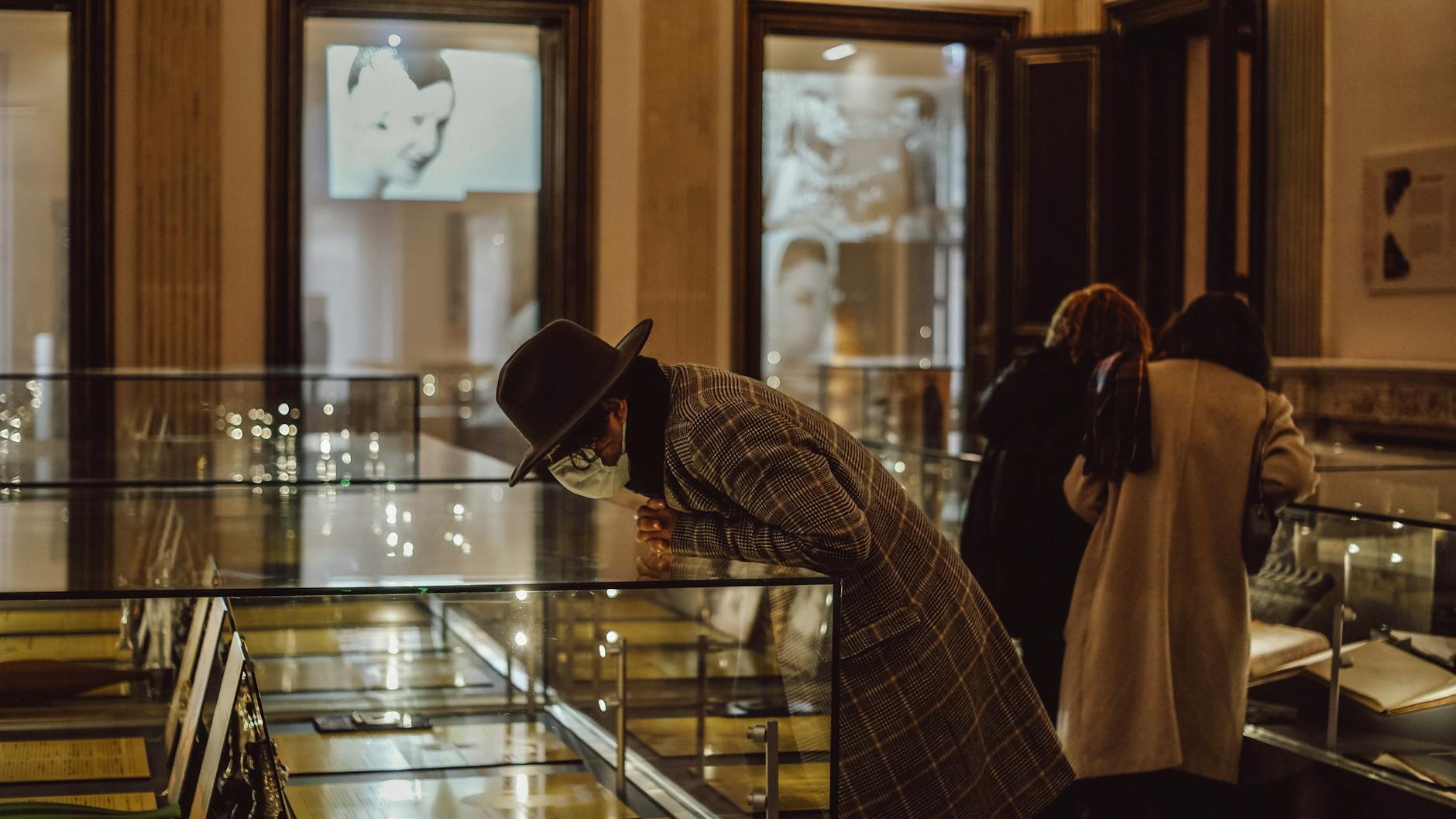
1. National History Museum, Boyana
First is not close to the centre and that is the only complaint. The National History Museum occupies the former communist government residence in Boyana, 8km southwest, and holds the Panagyurishte gold treasure — nine 4th-century-BC Thracian vessels in solid gold, the most famous archaeological find in Bulgaria — plus the Valchitran gold, medieval Bulgarian regalia, and a serious ethnographic section. Two hours minimum, three if you read. Entry €5, closed Mondays. Bus 64 from NDK or a €6 taxi.
The catch: the building is oversized, badly signed and about a third of it is uninteresting cold-war archive material you can skip. Head straight for the Thracian rooms on the ground floor, then medieval upstairs, and leave. The café on site is poor — eat afterwards in Boyana village. Combine with Boyana Church, ten minutes away, for the strongest half-day in Sofia. First rather than any centre museum because nothing else in the country matches what is in that gold cabinet.
2. Crypt of Alexander Nevsky Cathedral
Second is a museum you would never guess is a museum. The crypt of Nevsky, entered from the north side of the cathedral, is the National Gallery's branch for medieval Bulgarian religious art — the most complete icon collection in the Balkans, arranged chronologically from the 12th century through the National Revival. Ninety minutes covers it, entry is about €5, closed Mondays. The space itself is low, vaulted and dim, which is exactly right for the objects.
The catch: descriptions are heavy on saint names and light on context, so a guide or the audio tour (€3) helps. The Nesebar and Zograf schools of icon painting get their own rooms and are the point — do not race past them. Come after you have visited the cathedral upstairs so the space makes sense. Second rather than first because the collection is narrower than the History Museum's, but nowhere else can you see six centuries of Bulgarian icons in one place and the setting is unmatched.
3. Museum of Socialist Art
Third is the museum that makes Sofia legible. Out at G.M. Dimitrov metro in Iztok, the compound holds 77 monumental sculptures — Lenin, Dimitrov, red-star partisans, kneeling workers — rescued from communist-era public squares and arranged in a garden. Inside there is a painting gallery of socialist realism and a screening room running propaganda newsreels on loop. Ninety minutes covers it. Entry €3. Closed Mondays. It refuses to editorialise and lets you do the work.
The catch: the neighbourhood offers nothing else, so you take metro line 1 in and out. The English signage is minimal — the objects have to speak for themselves, which they do. Come after you have walked the yellow-brick centre, so the Party House and the mausoleum ghost make sense. Third rather than higher because the collection is small and specific; if the socialist chapter of Bulgarian history does not interest you, this drops several places. If it does, it climbs to first.
4. National Archaeological Museum
Fourth is central, compact and excellent. Housed in the 15th-century Buyuk mosque behind the Presidency, the museum runs from Neolithic goldwork (Varna, older than Egyptian) through Thracian, Greek, Roman and medieval periods. The Kazanlak tomb replica is here and the collection of Thracian silver drinking horns is world-class. Two hours if you read the labels, ninety minutes if you don’t. Entry €4, closed Mondays in winter, open every day summer.
The catch: the building is small and gets crowded when tour groups arrive between 10 and noon — go at 9am opening or after 3pm. The Neolithic room is easy to miss on the ground floor's left side and holds the Varna gold, which is arguably more important than the Panagyurishte hoard even if less flashy. Fourth rather than higher because the National History Museum in Boyana holds the bigger set pieces, but the Archaeological is denser and better curated for a short visit.
5. Ethnographic Museum and National Art Gallery
Fifth is two museums in one former royal palace on Battenberg Square, sharing an entrance and split down the middle. The ethnographic side holds Bulgarian regional costumes, textiles, and folk crafts — the wall of embroidered aprons alone is worth the ticket — and the art gallery holds Bulgarian painting from Zahari Zograf through the mid-20th century, with strong rooms for Vladimir Dimitrov the Master and the pre-war modernists. Two hours if you do both. Entry about €4 each or €7 combined.
The catch: the ethnographic side is more interesting to most visitors than the art side, which requires some knowledge of Bulgarian painting to fully land. If you have ninety minutes, do ethnographic only. The palace itself — Alexander Battenberg's residence, later the royal palace of Ferdinand and Boris — is worth seeing, and the courtyard café is one of the more pleasant lunch stops in the centre at €7-€10 for a plate.
6. Sofia History Museum in the Central Mineral Baths
Sixth is the newest major museum and the best building. The 1913 Central Mineral Baths, an Art Nouveau-Byzantine hybrid with striped brick and painted tiles, was restored and reopened as the Regional History Museum in 2015. The collection covers Sofia specifically — Roman Serdica, Ottoman Sofia, the National Revival, the socialist period — with rooms organised chronologically over two floors. Ninety minutes. Entry €3, closed Mondays. Combine with the free mineral water taps on the building's south side.
The catch: the collection is thinner than the building deserves, and some rooms are essentially local ephemera rather than must-see objects. It works best as a way to organise what you already saw in the streets — the maps and photos of pre-war Sofia are genuinely useful for making sense of the current city. Sixth rather than higher because the National History Museum covers similar ground with better objects, but this one is central and quick.
7. Earth and Man mineralogical museum
Seventh is niche but the mineral hall alone earns the entry. Housed in a former arsenal near NDK, the Earth and Man Museum's central hall holds giant crystals — amethyst geodes taller than a person, a fluorite specimen the size of a small car, meteorites you can touch — and it is genuinely striking. The rest of the museum is thinner: labelled cabinets of rocks organised by type, some educational displays about geology. Ninety minutes if you engage, forty if you don’t. Entry €3.
The catch: outside the crystal hall, the museum feels like a provincial university collection, and children lose interest fast unless they are already rock-obsessed. Do not schedule this if you only have two days in Sofia. It works as a rainy-afternoon backup or as a stop combined with NDK terrace next door. Seventh because the crystal hall is legitimately world-class but the rest is filler; if it were only the hall this would rank higher.
8. Sofia Synagogue museum
Eighth is small, quick and specific. The Sofia Synagogue — the third-largest Sephardic synagogue in Europe, dedicated 1909 — has a first-floor museum documenting the history of Bulgarian Jewry, including the extraordinary story of Bulgaria's refusal to deport its Jewish population during WWII. Thirty to forty minutes. Entry €3, includes the sanctuary. Closed Saturday. Behind Halite market, opposite the mosque and around the corner from the mineral baths, so it slots easily into a centre walk.
The catch: the museum is genuinely small and would not justify a trip on its own. Its value is in context — it completes the mosque-synagogue-church triangle that defines central Sofia's religious layering, and the WWII story is one the country is quietly proud of. Come after you have walked the yellow-brick centre and want to slow down. Eighth on the list because it is the smallest, but every visitor who does it leaves impressed rather than disappointed.
Questions, answered
How many can you fit in one day?
Three, comfortably, if they are central: Archaeological Museum, Nevsky Crypt, and Ethnographic. All within ten minutes of each other, all around €4. That is six hours of museum plus lunch. Add the Sofia History Museum for a fourth if energy holds. Do not attempt the National History Museum in Boyana on the same day — it is a half-day on its own.
Which is best for kids under 10?
Earth and Man for the giant crystals, Museum of Socialist Art for the outdoor sculpture garden they can walk around freely. The Ethnographic can work for the costumes. Avoid Nevsky Crypt (dark and quiet, kids get bored fast) and the National Archaeological (small rooms, glass cases, patience needed).
Any closed on Mondays?
Most of them. National History, Nevsky Crypt, Museum of Socialist Art, National Archaeological (winter only), Sofia History Museum in the Baths — all closed Monday. Ethnographic is closed Monday. Earth and Man is one of the few open Monday. Plan Mondays around Vitosha, Boyana Church, or day trips instead.
Are English translations reliable?
Mixed. National Archaeological is well-labelled in English throughout. Nevsky Crypt and Ethnographic have English on major pieces but not everything. National History has patchy English — the audio guide fills gaps. Museum of Socialist Art is deliberately minimal on labels. Sofia History Museum is decent. Earth and Man is largely Bulgarian-only in the geology sections.
Doing good is the business: every booking through Stay Sofia funds one verified tonne of carbon removal — same room, same price, no markup.
Start your search