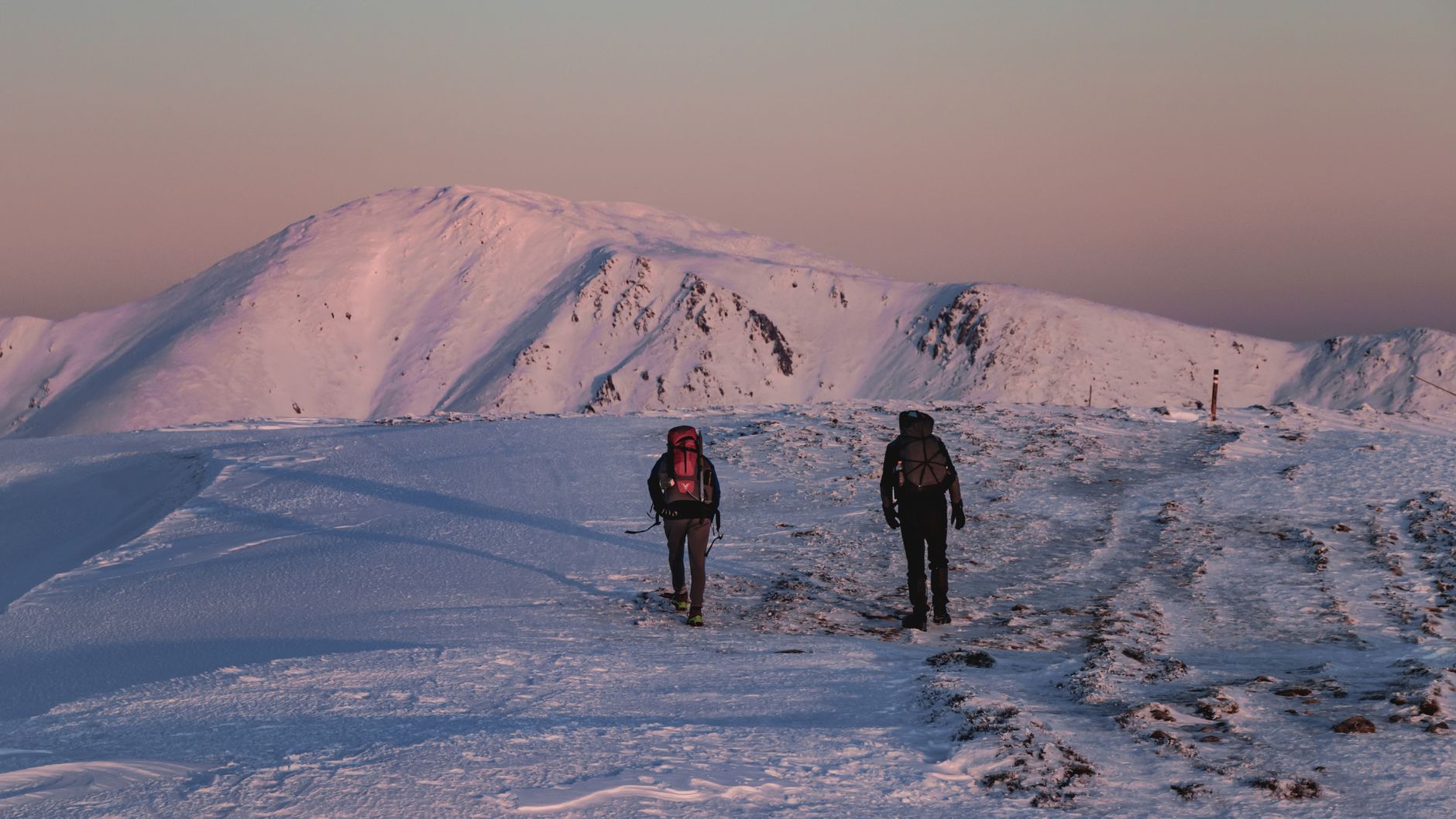
1. Aleko to Cherni Vrah return
First is Vitosha's obvious classic and it deserves the ranking. From the top of the Simeonovo gondola at Aleko (1,810m), the trail to Cherni Vrah summit (2,290m) climbs 480m over about 3.5km one way, taking two hours up and ninety minutes down on well-marked path. The final approach is genuinely alpine — rock, wind, the metal summit cross — and the view covers Sofia, Rila and the Balkan range in one sweep. Gondola €10 return; hike is free.
The catch: this is a proper mountain day out and needs mountain kit. Weather turns fast on the top, snow lies until mid-June in a normal year, and thunderstorms build most summer afternoons. Start by 9am, be off the summit by 2pm, carry a shell layer even in July. The trail is easy to follow but exposed for the final 200m. First rather than any lower peak because the summit itself is the reward — anything less than Cherni Vrah on Vitosha feels like you settled.
2. Boyana waterfall from the village
Second is the accessible classic — a 4km round trip climbing 400m from the tram terminus in Boyana village to the waterfall at 1,270m, on a well-worn forest path through pine and beech. Two hours up and back with a stop at the water, three hours if you push on to the moraine plateau above. Free, no ticket, no gate. Reachable from central Sofia on tram 2 to the terminus in about forty minutes, so this is a genuine no-car half-day hike.
The catch: the waterfall runs thin in late summer and disappoints in August. Go in May, June, or after autumn rain when it actually flows properly. The path is steep in places and slippery after wet weather — real footwear, not city shoes. Combine with a visit to Boyana Church at the trailhead (€5 timed entry). Second rather than first because the summit-day of Cherni Vrah is a bigger experience, but for reward-per-effort and accessibility this is the winner in the sub-half-day category.
3. Zlatnite Mostove (Golden Bridges) circuit
Third is the moraine river of Vitosha. The Zlatnite Mostove parking area at 1,340m, on the mountain's western flank, is the trailhead for a 6km loop around the stone river — a mile-long moraine of huge granite boulders left by the last ice age — and through pine forest to the Kamen Del summit at 1,862m. Three hours with photo stops. Bus 63 from Ovcha Kupel gets you there on weekends; a car is easier on weekdays.
The catch: the stone river is impressive in photos but a boulder-hop in reality, and children under about eight will struggle with the scrambling. In winter this becomes a genuine snowshoe route rather than a walk. The parking area has one small restaurant (mekitsa and grill, €4-€7) which is the only food on the route — bring snacks. Third because the boulder field is unique to Vitosha and worth seeing, but the summit reward is smaller than the top two options.
4. Dragalevtsi to Boyana traverse
Fourth is the traverse, not the summit. Starting at the Dragalevtsi chairlift base and finishing at Boyana village, this 10km route crosses the mountain's northern flank at around 1,300m elevation, passes Dragalevtsi Monastery, and delivers you to Boyana Church for the museum-and-food end. Five hours with stops. Bus 66 to Dragalevtsi, tram 2 back from Boyana — a fully public-transport day. Best in October when the beech woods turn orange.
The catch: this route is poorly marked in places and easy to lose on the ridge sections — download the map on a hiking app before starting. It is a walk in the woods rather than a viewpoint hike, so if you came for panoramas this is not the one. Fourth on the list because the payoff is atmospheric rather than dramatic, but for hikers who want a full-day, one-way route ending at food and a bus stop, it is the best on the mountain.
5. Kopitoto to Aleko ridge
Fifth is a linear traverse along the northern ridge from Kopitoto (1,348m) to Aleko (1,810m), about 8km one way, climbing steadily with big views over Sofia the entire route. Four to five hours. Take the Knyazhevo chairlift up (€5, weekends only), walk the ridge to Aleko, gondola down to Simeonovo (€7 one way). This is the view route — you are on the sunny side of the mountain looking at the city for most of the day, and there are almost no other hikers.
The catch: both lifts run weekends only, which limits this to Saturday or Sunday, and if either lift fails you are looking at a long walk out. The ridge is exposed in bad weather and there is no shelter along the route. Bring water and lunch — no cafés between the two stations. Fifth on the list because it depends on both lifts working the same day, but when it does, this is the walk with the most sustained view on the entire mountain.
6. Bistritsa to Aleko via Yagodina
Sixth is the honest workout. Starting in Bistritsa village at 900m and climbing to Aleko at 1,810m via the Yagodina trail, this is a 900m ascent over 7km — the hardest sustained climb on Vitosha's popular trails. Four hours up, two down via the gondola, five up-and-down if you insist on walking both ways. Bus 98 from Hladilnika gets you to Bistritsa. This is what fit locals do on a Saturday morning when they want a training day and not a picnic.
The catch: this is a proper hike, not a walk, and rewards fitness rather than views — the trail runs through forest for most of the ascent and the panorama only opens near the top. If you want views, take the gondola. If you want to earn the summit, take the trail. Sixth on the list because most visitors will not want this much effort for the reward, but for hikers looking for a genuine mountain day within city limits it belongs here.
Questions, answered
Best month for Vitosha hiking?
Late June to early October is the reliable window. July and August are warm but afternoon thunderstorms are frequent — early starts essential. September is the sweet spot: dry, clear, cool enough. May-June has snow patches on the summit; October delivers the beech colours. Winter hiking is possible but requires kit and experience — this is a snow mountain November to April.
Can you do these without a car?
All of them, yes. Trams and buses reach every trailhead. Tram 2 to Boyana, bus 66 to Dragalevtsi, bus 122 to Simeonovo gondola, bus 63 to Zlatnite Mostove (weekends), bus 98 to Bistritsa, chairlift from Knyazhevo to Kopitoto. Getting off the mountain is easier than getting on — most descents finish at metro or tram stops.
Any risk of getting lost?
The top two routes are well-marked and busy enough that you will not get lost. The traverse and the ridge routes require basic map skills — download a hiking app (Wikiloc, Komoot) and the trail. Fog rolls in fast above 1,500m and can drop visibility to twenty metres in minutes. If it closes in, retreat rather than continue. Nobody dies on Vitosha, but people get benighted every year.
Where to eat before or after?
Aleko has three restaurants at the gondola top, all mediocre, €9 mains. Zlatnite Mostove has one small grill. Boyana village has Vodenitzata (the mill restaurant, folk music, €9-€13 mains) and several cheaper mehanas. Dragalevtsi has small tavernas near the chairlift. Bistritsa has village kitchens serving lunch to hikers. Kopitoto has one weekend-only food truck.
Doing good is the business: every booking through Stay Sofia funds one verified tonne of carbon removal — same room, same price, no markup.
Start your search