Comparisons & rankings
Wheelchair-accessible hotels in Sofia-Grad, honestly ranked
Sofia's built environment is uneven for accessibility, but seven hotel categories genuinely deliver step-free stays — here are the specifics on ramps, lifts, bathrooms and what to verify before booking.
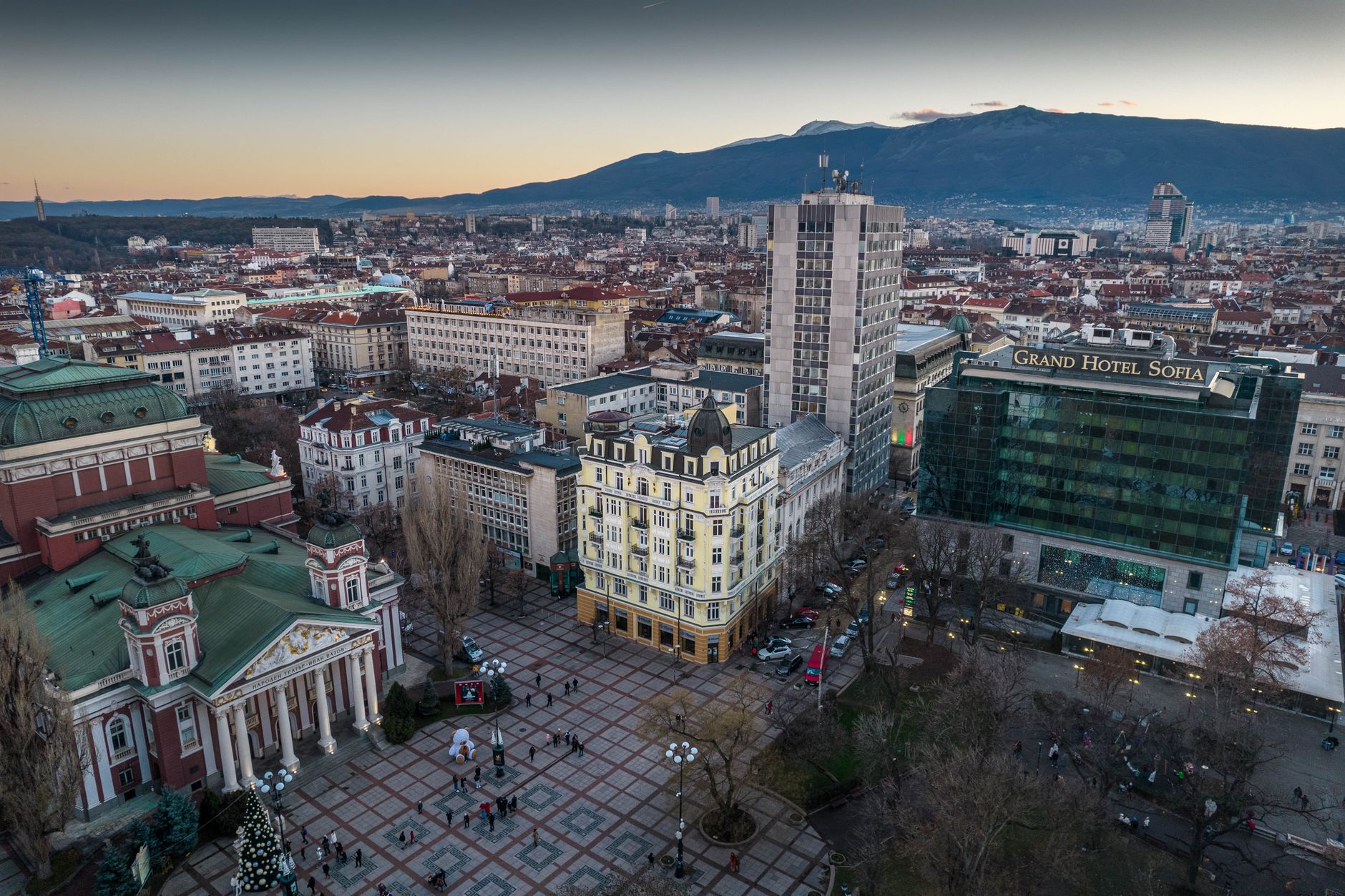
The honest state of accessibility in Sofia
Sofia's streets are a mixed bag. Central Sofia was largely built between the 1880s and the 1970s, with pavements that were narrow to start with and have since been broken by tree roots and utility works. Curb cuts exist on the main boulevards (Vitosha, Tsar Osvoboditel, Maria Louisa) but disappear in the side streets. The metro is fully accessible: every station has lifts, gaps between train and platform are under 5 centimetres, and staff will assist on request. Buses and trams are a mixed fleet — about 60 per cent of buses are low-floor, less than half of trams.
This matters for hotel choice because the pavement outside the hotel matters as much as the hotel itself. A four-star with a perfect accessible room five kilometres from a metro station on a broken pavement is worse in daily use than a three-star with an adequate room next to a metro exit. The rest of this piece ranks hotels by the combined score: room accessibility, entrance, lift, and the 100 metres of pavement between the door and the nearest step-free transport. All prices are for accessible rooms specifically, which usually cost the same as a standard room but must be reserved by phone or email because online systems mishandle them.
The chain hotels built after 2005
Sofia's newer chain hotels — mostly opened 2005 to 2018, mid-scale to upper-mid — were built to EU accessibility standards and generally deliver. Expect one to three accessible rooms per property with roll-in showers, grab bars, lowered fixtures and door widths of 80 centimetres or more. Rates €95 to €156 with breakfast. Reception is trained (variably) on accessibility protocols, and most have a written policy.
Book these for a first Sofia trip when you want the reliability of a standard chain product. The catch is uneven implementation: some properties have three accessible rooms of which one has a proper roll-in shower and two have baths with grab bars but a lip you cannot roll over. Verify with photos before booking — a good hotel will send them within 24 hours. Verify the entrance ramp too; some of the older buildings in the chain portfolio have a step at the door that the marketing does not mention. This tier gets 80 per cent of it right, and the 20 per cent that fails is what makes verification essential.
The five-stars with retrofitted accessibility
The central five-stars, several of which date to the 1970s or earlier and have been renovated in stages, have retrofitted accessibility with mixed results. Two to five accessible rooms per property, roll-in showers with proper turning radii in the bathroom (150 centimetres in the best, 130 in the compromised), staff who have handled everything from wheelchair users to guide dogs. Rates €173 to €295 with breakfast. The lobby and public areas are generally excellent; the challenges are usually at the room level.
Book these when the room really matters and you want the wraparound of a five-star (concierge who will arrange accessible transport, restaurant that will bring the menu to the room, medical concierge on call). The catch is inconsistency across renovations: an accessible room on the third floor might be perfect while a similar one on the seventh is compromised because the renovation of that floor happened three years earlier under different specifications. Ask which specific room number is being held for you and get photos. This is the highest tier of service and the one where the mismatch between marketing and reality is smallest, but not zero.
The metro-adjacent hotels for step-free transport
Sofia's metro has 47 stations across four lines, all with lifts, all with staff-assisted boarding on request. The stations most useful for tourists — Serdika (line 1/2 interchange, main museums), NDK (culture palace), Sofia University (Rectorate), Vasil Levski (stadium), and Airport Terminal 2 — are all fully step-free. Hotels within 150 metres of any of these stations on flat, well-paved routes are genuinely usable without transfer help.
Rates run €74 to €156 depending on tier. Book by mapping the route from the hotel entrance to the metro entrance in a satellite view and looking for continuous pavement, curb cuts at every crossing, and no stairs. Street View is invaluable here. Ask the hotel to confirm the route in an email — a good property will walk it and confirm. The metro fare is €2 flat regardless of distance and stations are staffed until midnight, which is later than many European systems and matters for evening plans. This is the category I would actually book first, before the room-level features, because it defines the daily experience.
The apartment-hotels with ground-floor units
Some of the newer apartment-hotels have designated ground-floor accessible units — one or two per building — with wider doors, roll-in showers, and no internal steps. Rates €69 to €121 for a one-bedroom. The advantage is space and cooking, both of which matter more on a longer stay: 40 to 60 square metres versus 20 to 25 in a hotel room, kitchen with lowered counter in some, washer for laundry.
Book these for stays of five nights or more, especially with a companion who wants to cook rather than eat out every meal. The catch is what I flagged in the EV piece: reception at these properties is often part-time, and check-in outside office hours is by keypad. This works if you can operate a keypad from a wheelchair (most are at 100 to 130 centimetres height, which is usually workable) but not if you arrive to find the code has changed and no one is at the desk. Verify the after-hours arrival process and get the keypad code by email at least 24 hours before arrival.
The Bankya spa hotels for medical rehabilitation
The Bankya thermal hotels have long served the medical rehabilitation market and are the most accessibility-experienced properties in the region. Several were built or renovated specifically for guests with mobility limitations, with wide corridors, pool hoists on request, treatment rooms with accessible tables, and staff who are nurses rather than spa attendants. Rates €113 to €191 with breakfast and spa access.
Book these when the trip has a medical or rehabilitation angle, or when the spa is central to the plan and you want a property where the pool is a real option rather than a token. Ask specifically about pool access — some have permanent ramps into the shallow end, others have portable hoists that need booking. The catch is the same as I mentioned in the thermal piece: the food is sanatorium-standard rather than restaurant-standard, and the atmosphere is quiet and clinical. For a rehabilitation break this is exactly right; for a leisure break with an accessibility need it can feel institutional.
The boutique hotels that do not work
The boutique conversions in Lozenets and Oborishte, which I have praised elsewhere in this series, are largely inaccessible. They are inter-war buildings with narrow entrance steps, small elevators that seat one adult with a folded chair only, and bathrooms that were not designed for anyone with a mobility limitation. A few have retrofitted one ground-floor room but the retrofit is usually cosmetic — grab bars added, roll-in shower fitted — while the bathroom itself is still too narrow to turn a chair in and the entrance to the building has a three-step porch.
So the honest answer for this category is: skip it. The charm that makes these hotels attractive on a walking city break becomes friction and disappointment for anyone with a mobility limitation. There are enough accessible options in the chain and five-star tiers that there is no reason to accept a compromised boutique. If you want the neighbourhood, book an accessible apartment-hotel in the same area and get the atmosphere without the building's limits. This is the one category in the piece where I recommend outright avoidance.
The five verifications that filter the market
First: measure the entrance in centimetres, including the step at the door if any. Any step above 3 centimetres needs a ramp, and "we have a portable ramp" needs to be verified with a photo of the ramp actually deployed. Second: measure the lift interior in centimetres. Anything below 100 by 130 will not take a standard powered chair, and 90 by 110 will not take even a folded manual one comfortably. Third: measure the bathroom, specifically the turning radius from the toilet and the roll-in space at the shower.
Fourth: verify the bed height — a standard hotel bed is 55 to 65 centimetres from floor to top of mattress, which is transfer-friendly. Some designer beds are 45 or 75 centimetres and either is difficult. Fifth: verify the route from the door to the metro or bus stop with a satellite view and Street View. All five verifications take about 45 minutes on the first hotel you screen and 15 minutes each after that. The time is real but the alternative is arriving at a hotel that does not work, and that is the trip-ending mistake this whole piece is written to prevent.
Questions, answered
Is Sofia's metro reliably accessible?
Yes. All 47 stations have lifts and step-free platforms, the trains have flat access, and staff will assist on request via help buttons on each platform. In seven years of use the failure I have seen is occasional short lift outages (an hour or two at a time) which are announced and covered by staff-assisted alternatives. The system is genuinely one of the most accessible in central Europe.
Are accessible taxis available in Sofia?
Yes, but not on the general fleet — you need to book a specific accessible vehicle through OK Supertrans or a specialist provider, usually 24 hours in advance. Rates are the standard meter fare plus a small booking supplement. Do not rely on street-hailing; the general fleet is a mix of sedans and small hatchbacks, none purpose-adapted.
Can I hire a mobility scooter or powered chair in Sofia?
Yes, from two or three specialist providers with delivery to central hotels. Book at least a week in advance, especially for powered chairs in the higher weight capacities. Manual chairs are easier to source at short notice. Rates run €22 to €52 per day depending on equipment. The rental market is smaller than in Western European capitals but it exists and is reliable when booked with lead time.
Doing good is the business: every booking through Stay Sofia funds one verified tonne of carbon removal — same room, same price, no markup.
Start your search